
















We are, as the saying goes, between Iraq and a hard place. Unfortunately, events this week seem likely to drive us inexorably closer to the hard place – one that is going to be a lot worse than what we have seen in Iraq so far.
These events include a two-day trip to the woodshed in Amman, Jordan with President Bush for Iraqi Prime Minister Nuri al-Maliki. They will be considering ways in which al-Maliki can prevent the collapse of his government and his country’s slide into full-scale civil war. Presumably, the two leaders will be factoring in the results of Vice President Cheney’s three-hour visit to Riyadh to appeal to the Saudi king, Abdullah, for help with Iraq.
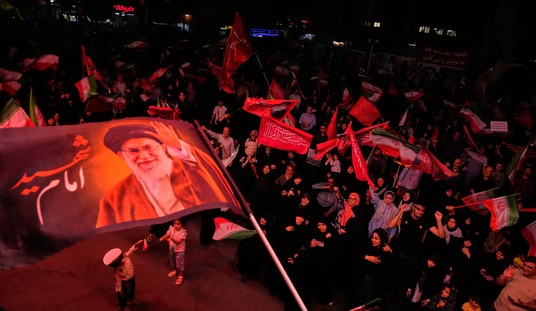
Iraqi President Jalal Talabani will be meeting with his Iranian counterpart, Mahmoud Ahmadinejad, in Tehran to discuss bilateral relations. Presumably, among the topics for discussion will be the success Iran’s regime is having in its efforts to destroy a Free Iraq.
Finally, there will be two days of deliberations by the Iraq Study Group, co-chaired by former Secretary of State James Baker and former Rep. Lee Hamilton. This panel, which was commissioned by Congress to examine alternatives to the present approach in Iraq, is reportedly considering a proposed report drafted largely at Mr. Baker’s direction.
What all these events have in common is the notion that the “solution” to Iraq lies in a “regional” approach. The leitmotif is that U.S. unilateralism is dead, long live multilateralism. A chastened America will be brought to its senses by the collective wisdom of Jim Baker, Mahmoud Ahmadinejad and Kings Abdullah of Jordan and Saudi Arabia.
But what, exactly, does this regional approach portend?
Reduced to its essence, the Baker-promoted regional strategy is a euphemism for throwing Free Iraq to the wolves in its neighborhood: Iran, Syria and Saudi Arabia. The vehicle for doing so will presumably be some sort of international conference attended by such powers, together with others in the region (like Jordan and Egypt), and augmented by interested parties from elsewhere – including Britain, France, Russia and China.
Unfortunately, past experience has taught that such a conclave would not be good for freedom-loving people. The Iraqis would, of course, be toast. The best they could hope for is a new autocratic ruler whose repressive behavior will enjoy the support of the tyrants next door. They will no longer have the United States to kick around, and those who foolishly stood with us for a better future will meet an unpleasant fate.
If we are lucky, the regional “process” will afford American forces a fig-leaf behind we might obscure our strategic defeat. Heliborne evacuations from the Green Zone a la the fall of Saigon three decades ago may be avoided, provided our enemies allow us to effect a dignified “strategic redeployment.” More likely, we will be bloodied on the way out by terrorists, insurgents and others intent on compounding the ignominy insofar as it will serve their larger purpose: our destruction in the world beyond Iraq, including ultimately here at home.
Continued... |