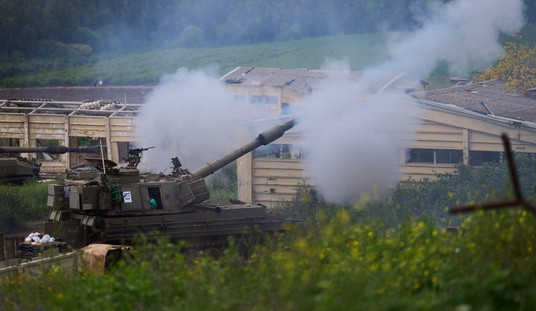
WASHINGTON -- In the midst of last week's meaningless Arab League summit in Damascus, Syria, Iraqi Prime Minister Nouri al-Maliki boldly launched his government's first major offensive against renegade Shiite militias. Ranging from Baghdad's suburbs south to Basra -- the country's oil port and second-most populous city -- Saulat al-Fursan (Charge of the Knights) is the largest and most complex operation undertaken by the Iraqi military since 2003. The effectiveness of Iraq's soldiers, police and special operations forces in this bloody fight will be an important factor for Gen. David Petraeus and Ambassador Ryan Crocker during Tuesday's congressional appearances.
As is so often the case with "news" from Iraq, the so-called mainstream media have delivered predominantly negative stories -- and plenty of rhetoric -- since the operation began March 26. The battle has variously been described in the press as "a major setback for al-Maliki" and "proof that Muqtada al-Sadr is stronger than ever."
Because so few U.S. and coalition personnel were involved in executing the campaign, most broadcast and print reports originated in Baghdad -- where the focus was on mortar rounds and rockets fired into the Green Zone. Field reports filed from Najaf, Karbala, Diwaniyah, Kut, Hillah and Basra -- all scenes of heavy fighting between Iraqi security forces and renegade Shiite militia units -- generally have been filed by news agency stringers of dubious credibility.
Political leaders in Baghdad and Washington haven't been much more helpful than the potentates of the press in presenting anything but the barest of facts about the operation -- leaving plenty of room for critics to describe the fighting and its aftermath in their own terms. Though al-Maliki went to Basra to direct the effort "to restore law and order" personally, few Western journalists accompanied him. His limited availability to reporters during the heat of the fighting did little to refute negative -- and presumably distorted -- press stories.
After President Bush described the operation as a "defining moment in the history of a free Iraq," Sen. Barack Obama said, "It has not resolved the underlying tensions," and then renewed his pledge to "set a clear time frame for withdrawal" of U.S. troops from the country. And as if to set the tone for the upcoming Petraeus-Crocker hearings, Sen. Joseph Biden, D-Del., declared that the Bush administration "continues to define success downward."
None of this is particularly helpful in explaining to the American people what's really happening and what it means. To that end, I contacted some of the coalition personnel with whom our Fox News' "War Stories" team was embedded last December during our ninth trip to Iraq. Here is a synopsis of what those with "boots on the ground" have to say about our Iraqi allies and their adversaries:
-- The Iraqis planned and executed the operation with little U.S. involvement and managed to commit more than 40,000 troops in high-intensity combat against well-armed, militia terrorists in six cities -- a feat that would have been impossible just six months ago.
-- Conventional Iraqi army and police units operated effectively together in multiple large-scale, simultaneous urban combat for the first time. Though there were inevitable snafus, most of the problems were logistical, not operational. All commended the courage and tenacity of the Iraqi soldiers.
Continued... |