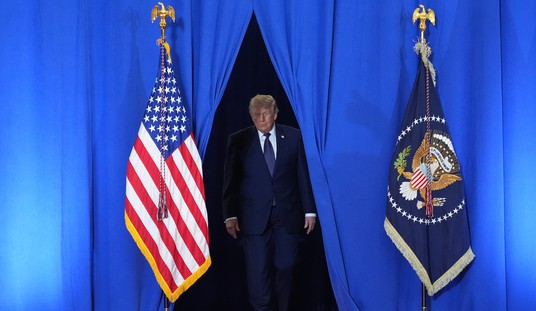
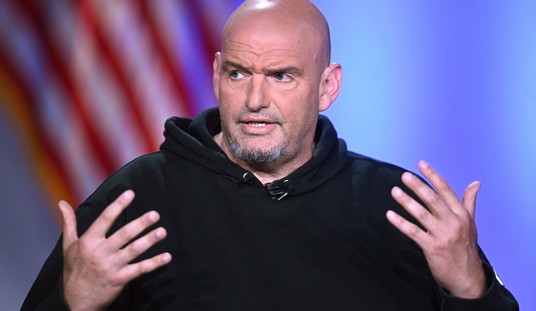
Sen. Kerry and President Bush hope to ban political criticism by 527 groups, including one of the tiniest of them -- Swift Boat Veterans for Truth. According to White House press secretary Scott McClellan, "The president said he wanted ... to pursue court action to shut down all the ads and activity by these shadowy 527 groups."
Press reports quickly described 527 groups as a "loophole" in the Bipartisan Campaign Reform Act of 2002 -- sponsored by Arizona Republican John McCain and Wisconsin Democrat Russ Feingold in the Senate, and by Connecticut Republican Christopher Shays and Massachusetts Democrat Marty Meehan in the House. As Supreme Court Chief Justice Rehnquist explained, in his dissent from a deplorable 5-4 decision allowing that 2002 law to stand, "All political speech that is not sifted through federal regulation ... would be a ?loophole' in the current system." In a system with no such loopholes, free speech would be entirely supplanted by regulated speech.
The 527 organizations date back to 1974 and have been required to report contributions and spending to the IRS since July 2000. There is nothing "shadowy" about them.
The Center for Responsive Politics categorizes nearly all 527 groups as ideological -- with"Democratic/Liberal" raising $131.5 million so far this year and "Republican/Conservative" raising less than $17 million (www.opensecrets.org). That 8-to1 tilt toward Democratic/Liberal 527 contributions makes it ludicrous that Kerry whined that the Swift Boat Veterans are "funded by hundreds of thousands of dollars from a Republican contributor out of Texas." Texas homebuilder Bob Perry, who is not a major contributor to the Bush campaign, gave the Swift Boat dissidents $200,000. Two other "large donors" gave $25,000. Even $200,000 would be pocket change for big contributors to Democratic 527 groups, such as insurance executive Peter Lewis or real estate heir and Hollywood playboy/producer Steve Bing, both of whom bankrolled even more hysterical anti-Bush TV ads than billionaire George Soros.
The largest 527 is the $41.6 million Joint Victory Campaign, whose fourth-largest contributor ($4.6 million) is George Soros. This is a joint fund-raising committee run by the second largest 527, the Media Fund, and the third largest, America Coming Together (which received another $5 million from Soros). The next two largest 527 are government employee unions. They are followed by MoveOn.org, whose main contributor is -- you guessed it --George Soros ($2.6 million). Next largest is the New Democrat Network, whose largest contributor is the Media Fund.
The ads of 527 groups on the "wrong" (other) side of any issue are undoubtedly annoying to affected politicians. But to "shut down all the ads and activity by 527 groups" would be another blatant assault on free speech. Shut down means shut up. Even if the 527s could be muzzled, people with a strong interest in political issues would soon find other ways to be heard. Resourceful organizations, individuals and foundations can, for example, bankroll biased books, films and studies with transparent political objectives. Is the next "reform" going to censor biased documentaries and ban partisan books?
Congress has been repeatedly "reforming" campaign finance since 1974. Each reform leaves a "loophole" that supposedly requires another law, which soon reveals yet another method by which people express themselves politically, which requires yet another law, and so on. Restrictions on individuals boosted fund raising by organized political action committees (PACs); restrictions on PACs boosted "soft money" fund raising by political parties; restrictions on political parties boosted fund-raising by tax exempt 527 organizations.
What "reform" has come to mean is that political opinion should be confined to opinionated journalists, loudmouth entertainers and disingenuous movie producers. Everyone else should just shut up. The 2002 law, for example, actually bans labor unions and corporations from producing TV and radio ads for the last 60 days before an election, although there is no such ban (yet) for PACs or 527 groups.
My first article on campaign reform (or deform) laws appeared in 1974, in The American Spectator, co-authored by Sam Kazman, now general counsel for the Competitive Enterprise Institute. We argued that protecting incumbents would be the main effect of those initial efforts to limit financing. Incumbents have such huge advantages over challengers -- such as free publicity and the ability to use pork-barrel spending to lure PAC money -- that challengers have to spend millions more to have any chance. Limiting the challengers' access to large individual donors, we predicted, would be a job security program for incumbents. By no coincidence, incumbents were re-elected 98 percent of the time in the past three congressional races.
Another predictable result of restricting individual contributions was to greatly enhance the relative political clout of organized interest groups, including PACs of the Association of Trial Lawyers, The American Federation of Municipal Employees and The American Federation of Teachers.
Congress naturally rigged campaign reform against the little guy and in favor of organized interest groups. Under the 2002 law, individuals can contribute only $2,000 to a candidate, but they can give $5,000 to a PAC, which can then give $5,000 to a candidate. Individuals can also give $35,000 to political parties. Those priorities seem cleverly designed to compel candidates to pander to PACs, party bosses, and bundled "individual" gifts from law partners and investment bankers. Continued... |