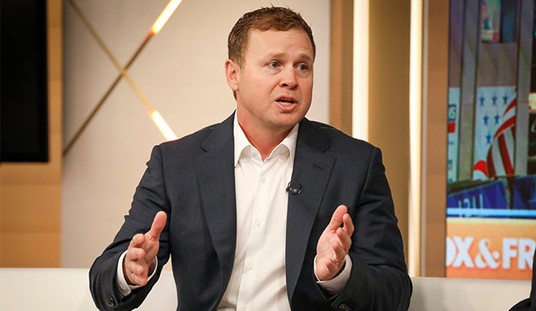
Bill O'Reilly, host of the popular Fox News show "The O'Reilly Factor," has been preaching to his flock to buy no gas on Sundays. "Let's send a message to these energy people who operate in the shadows," he says. That suggestion should have been saved for a different section of the show, "The Most Ridiculous Item of the Day." If we all rush to fill up on Saturday rather than Sunday, that would have zero effect on the amount of fuel we buy. The only "energy people" who could conceivably be hurt would be gas stations who nonetheless stubbornly remained open on Sundays. In early September, O'Reilly announced, as a matter of belief, that "the five major American oil companies are taking advantage of Hurricane Katrina and the war on terror to compile record profits by raising gas prices through the roof." The Oil and Gas Journal offers a somewhat more complex interpretation of what has been happening: "With the Louisiana Offshore Oil Port, the biggest U.S. facility for importing crude, temporarily shut down by Hurricane Rita when the storm came ashore Sept. 24 near the Texas-Louisiana border, U.S. crude imports fell by nearly 1.6 million b/d (barrels a day) to 8.1 million b/d in the week ended Sept. 30. Crude input into U.S. refineries plummeted by 2.9 million b/d to 11.7 million b/d, with refineries operating at 69.8 percent of capacity that week after many Gulf Coast facilities shut down in preparation for the hurricane. 'Gasoline and distillate fuel production declined dramatically,' said EIA (the Energy Information Agency). " Putting such unpleasant realities aside, O'Reilly recently launched a "Are You Getting Hosed at the Pump?" segment, in which John Birger of Fortune was repeatedly squelched for trying to explain how markets work. O'Reilly blustered, "Nobody knows what the market is, Mr. Birger. Nobody knows what that is. It's not a person." He really seems to imagine the price at your local gas station is literally set by decree by the bosses of five oil companies. "You can't have an open market," O'Reilly explained, "when you have only five major oil companies. ... I think they're price-fixing. I think all the refineries are saying to Rudy at the gas station: 'We're going to charge you this. And if you don't like it, you're not going to get any gas. ... It's the greedy oil companies that are making it." Since prices of oil and gasoline have gone down at least as often as they've gone up, over the years, O'Reilly's novel theory of changing prices implies that greed is highly variable, causing oil prices to drop whenever five CEOs are feeling charitable and rise when they're in a cruel mood. In reality, the market for gasoline is much wider and deeper than five majors. The National Association of Convenience Stores (NACS) represents 2,200 companies who sell half of the nation's gasoline. The Society of Independent Gasoline Marketers of America (SIGMA) represents 231 companies that sell about 31 percent of all U.S. gasoline, including big-box retailers like Costco and Kroger. SIGMA members get only 40 percent of their gasoline from major oil companies, and only 6 percent of them get all their fuel from the majors. O'Reilly is always quick to tell us what he thinks or believes, as if reality were a matter of opinion. The only apparent fact he mentioned was some unseen "study" by University of Wisconsin economist Don Nichols, described by The Associated Press as follows: "Historically, Nichols said, the markup between the price of a gallon of crude and a gallon of gasoline is about 85 to 90 cents a gallon, including refining, distribution and taxes. At $50 for a 44-gallon barrel of crude, he said, the pump price should be about $2 a gallon, a little more or less in some states depending on taxes. At $65 a barrel -- nearly identical to the price in Tuesday afternoon trading -- a gallon should be about $2.30. ... For gasoline to be $3 a gallon, he said, crude should be selling for about $95 a barrel." Continued... |