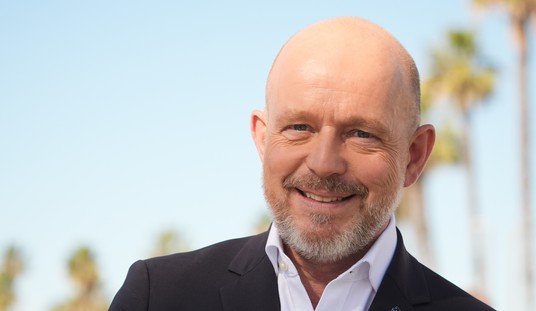
Individual freedom, property rights, free trade and limited government are not exactly core values of either major party today, but they were the philosophical and political stuff America was founded on. Brian Doherty, a Reason magazine editor, has written “Radicals for Capitalism,” a “freewheeling” history of the post-World War II libertarian movement whose brilliant, principled and always outnumbered thinkers – lead by icons Milton Friedman, Ayn Rand, Friedrich Hayek, Murray Rothbard and Ludwig von Mises -- have greatly influenced American politics and public policy. I talked to Doherty Feb. 21 by phone from Los Angeles.
Q: What’s a quick synopsis of your book?
A: It tells the personal stories of the philosophers, economists, politicians and think-tankers who have pursued the often thankless task in 20th century America of pushing the ideas of libertarianism – the radical ideas that actually were at the root of the American founding. The heart of libertarianism is pretty much in the Declaration of Independence – that human beings have the right to life, liberty and the pursuit of happiness, not the government guarantee of happiness.
Government’s only purpose is to protect those rights and if it does not protect those rights, we have the right to alter or abolish it. In the 20th century, a bunch of people realized, especially post-Roosevelt and the New Deal, that government was indeed violating those rights, left, right and center, and they strove to alter it, mostly through education.
Libertarians have tended to be a pretty intellectual lot. They have economists and novelists as their great leaders. The very first libertarian think tank was called the Foundation for Economic Education. They were focused on education. They believed that if they could explain the benefits of liberty and free markets to people, that the government would then follow. And while you certainly could not say they’ve been victorious, I think the story the book tells shows a lot of very encouraging successes.
Q: Why should anyone not already a libertarian read your book?
A: Because libertarianism, whether you like it or not, actually has become an idea to be reckoned with on the American political landscape. I argue in my book that such prominent Republican figures as Barry Goldwater and Ronald Reagan had a great deal of libertarianism at their heart and that it was the libertarianism in them that actually was most responsible for what people loved about them.
This notion of trusting the people and getting government off people’s back is a very libertarian message. Social movements from home-schooling, the school voucher movement, the medical marijuana movement, the anti-eminent domain movement, the movement to get rid of the draft, the welfare reform of the '90s, which was based to a large degree on the work of libertarian author Charles Murray -- these ideas have had an enormous impact on the policy scene and I would argue that as the “Entitlement State” of the 20th century faces an inevitable collapse because of fiscal realities, libertarian ideas are going to become all the more significant on the American scene in the 21st century.
Q: What’s a brief definition of libertarianism?
A: The belief that government, if it has any purpose at all – and there are some libertarians who think it doesn’t – then that purpose is only to protect its own citizens’ lives and property from direct force and direct attack. The implications of this can get very radical, from no restrictions on peoples’ use of any drug, whether it be for their own personal pleasure or even for medicine; it could mean an end to prescription drug laws. It could mean an end to all of the overseas military commitments the U.S. has been involved in that don’t actually involve defending the actual borders of this country. So while it’s a very Yankee Doodle philosophy, it’s very much rooted in the American founding. It has implications that are very radical – which is why I put radical in the title of my book.
Q: Is or was America ever a libertarian country?
A: Never in practice. Philosophically, it was extremely libertarian in its founding, but due to the religious and social mores of the time, there were all sorts of restrictions on what people could actually do – including some vagrancies laws that basically didn’t allow certain people to even walk into certain cities unless they lived there or had jobs. And of course, the status of blacks and women, which were horrendous in libertarian terms pretty much until the mid 20th century, prevented the political philosophy from functioning in a libertarian way. So no, libertarian remains a cause whose full flowering remains for the future while being rooted in core American ideas. The 19th century, despite popular myth, was not an era of rampant laissez-faire, which I discuss in my book.
Q: Do libertarians have more political power today than 30 years ago?
A: They do, though most of that influence is not through the political party with the word “libertarian” in its name. That party’s done very well for itself as a third party. It’s managed to stick around and grow for over 30 years. It drew over 13 million votes at every electoral level in 2006. It’s done nicely for itself, but the real influence of libertarian ideas has been through the two major parties.
Bill Clinton’s welfare reform was highly influenced by libertarian Charles Murray’s ideas about welfare in his book “Losing Ground.” Milton Friedman was a great influence on both federal reserve policy regarding inflation in the early ‘80s and in his work on the draft in the Nixon era, but again, done through Republican politicians. So yes, it has been influential, though not necessarily flying the explicitly libertarian banner in doing so.
Q: What was the most surprising or important thing you learned from doing this book?
A: Exactly how despised and outsider these ideas were in the '40s and '50s. I kind of knew it, but I was shocked to find certain details about it. One was the story of Rose Wilder Lane, the great libertarian author and the daughter of Laura Ingalls Wilder, the author of the “Little House on the Prairie” books. She was actually investigated by the FBI in the late '40s for daring to write on a postcard, that an officious postmaster read, that she considered Social Security the sort of socialist central control that we were supposed to be fighting against in World War I and World War II. Continued... |