| Going into this election cycle, Democrats thought that corporate
financial scandals would reinvigorate the class warfare issue for them. But
it hasn't worked out that way. New data from the Internal Revenue Service
and the Securities Industry Association help explain why.
Throughout the 1980s, Democrats beat the class warfare issue
like a drum. The rich were getting richer as a result of Ronald Reagan's
policies, they said. This led to the poor getting poorer and a disappearing
middle class, so we heard over and over again.
The truth was that the economic pie was getting bigger, meaning
that every income group was steadily getting better off. The rising share of
income going to the wealthy, therefore, was not coming at anyone's expense.
To the extent that the middle class was shrinking, it was not
because those previously in the middle class were become poor, but because
they were joining the ranks of the rich. Moreover, a high degree of income
mobility meant that those classified as poor one year could easily find
themselves in the middle class the next. Conversely, those among the rich
for a time often fell into lower income categories later.
For these reasons, the class warfare issue never bit as deeply
as Democrats thought it should. Although there were many press reports on
the subject, when voters went to the polls they still tended to support
candidates favoring tax cuts against those wanting to soak the rich.
The trend reversed a little under Bill Clinton, but not much. He
ran on a middle class tax cut in 1992. And when raising taxes on the rich in
1993, he only raised the top rate to 40 percent -- far below the 70 percent
rate under the previous Democratic president, Jimmy Carter. In 1997, Clinton
even supported a Republican-sponsored tax reduction that included a cut in
the capital gains tax.
Even rhetorically, Clinton wasn't much of a class warrior. On
the contrary, he tied himself tightly to corporate America and a balanced
budget. Although many Democrats were uncomfortable with his espousal of
historically Republican policies, few were critical. They were just as eager
as Clinton to take credit for the economic boom of the 1990s, even though it
did them little good politically, as Republicans took the House and Senate
in 1994.
As a consequence, Democrats got out of practice with the class
warfare issue. In contrast to the 1980s, very few articles appeared in the
major media blaming Clinton's policies for the huge increase in income going
to the rich -- much greater than on Reagan's watch.
Even those who continued to preach class warfare found the
atmosphere less hospitable. One reason is that having pushed a tax increase
on the rich in 1993, Democrats couldn't very well demand more such increases
when the budget deficit was moving into surplus. And the stock market boom
drew many new investors into the market, changing their perspective from
that of working class to investor class.
These factors are still making it difficult for Democrats to get
traction on class warfare. For example, the SIA recently reported that,
despite the huge $7 trillion decline in the stock market over the last 2
years, stock ownership continues to rise. The number of households owning
corporate equities rose from 49.2 million in 1999 to 52.7 million this year,
and the number of individual investors increased from 78.7 million to 84.3
million.
New IRS data also make it difficult for Democrats to claim that
the rich aren't paying their fair share. According to just-released figures
for 2000, the top 1 percent of taxpayers, ranked by income, now pay 37.4
percent of all federal income taxes. The top 5 percent now pay more than
half of such taxes, and the top 10 percent pay better than two-thirds.
While it is true that these people also report a large share of
the income, their tax shares are far higher than their income share. For
example, the top 1 percent reported 20.8 percent of income, but their tax
share was almost twice that. The reason is that they pay very high tax
rates. The average tax rate for those in the top 1 percent is 27.45 percent.
Everyone else paid 12.1 percent -- less than half what the rich paid.
As a result of the high share of total taxes paid by the rich,
the poor and lower middle class pay almost nothing in the aggregate. The
bottom 50 percent pay just 3.9 percent of all federal income taxes.
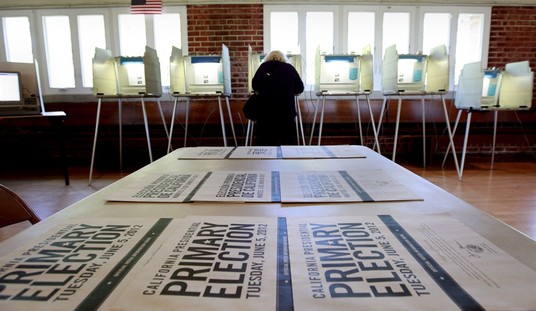
The political importance of this is that a large number of
Americans have no stake in the outcome of the election. Since they bear none
of the cost of government, they simply don't care who wins. So they stay
home on Election Day.
But as the tax burden rises on the taxpaying class, they have an
increasing incentive to vote because they have a big stake in the results.
Thus Democrats are finding that their class warfare message has little
impact, since it resonates mainly with non-voters, while the Republican tax
cut message hits home with taxpayers.
|