Last week brought the death of Seymour Melman, a Columbia University economist known for his opposition to defense spending. Although his extreme pacifism obscured his point, Melman raised an important question about the impact of government spending on the economy that has yet to be satisfactorily answered.
In Keynesian economics, which has dominated economic thinking since World War II, government spending drives economic growth. In other words, government spending is per se a good thing for the economy. The problem is that neither John Maynard Keynes nor his many followers ever differentiated among different types of government spending. Spending is spending and it doesn?t matter whether it is for investment or consumption, pure transfers or purchases of goods and services, tanks or highways.
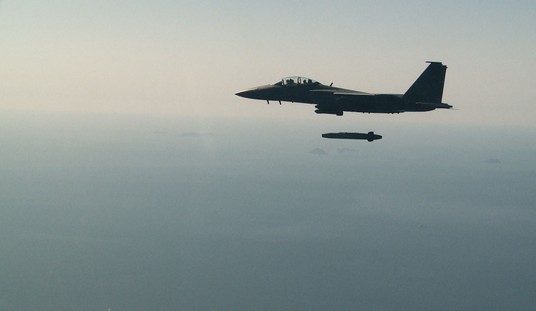
Nobel Prize-winning economist Paul Samuelson put it this way in his best-selling economics textbook, ?There is nothing special about government spending on jet bombers and intercontinental ballistic missiles that leads to a larger multiplier support of the economy than would other kinds of government expenditure.?
Keynes himself made this point abundantly clear in The General Theory, his most famous book, published in 1936 in the midst of the Great Depression. ?Pyramid-building, earthquakes, even wars may serve to increase wealth,? he wrote. ?To dig holes in the ground, paid for out of savings, will increase, not only employment, but the real national dividend of useful goods and services.?
In 1940, Keynes concluded that war might be the only way that politicians in democratic nations could rationalize spending enough to bring about full employment. ?It is, it seems, politically impossible for a capitalistic democracy to organize expenditure on the scale necessary to make the grand experiments which would prove my case?except in war conditions,? he wrote in The New Republic.
As it happened, the onset of war did indeed coincide with the end of the Great Depression. This led most economists and policymakers to conclude that the war itself is what brought the economy back to health. As economist Robert Lekachman put it, ?The war pointed a sharp Keynesian moral. As a public works project, all wars (before the nuclear era) are ideal. Since all war production is sheer economic waste, there is never a danger of producing too much.?
In several academic papers, economic historian Robert Higgs has argued that the ?prosperity? of World War II was something of an illusion. Full employment disguised the fact that most consumers were actually worse off. Nevertheless, the illusion was powerful and overwhelmed any misgivings politicians may have had about basing prosperity on war.
The great fear that everyone had as World War II drew to an end was that the Great Depression would start up again where it left off. A number of economists, such as Alvin Hansen, had argued before the war that a period of semi-permanent stagnation had set in and that little could be done except to learn to live with it. Continued... |