Republican presidential candidate Rudy Giuliani was in Washington on Tuesday
to raise money and to see me. In a nondescript office building two blocks
from the White House, Giuliani answered a wide range of questions on
domestic and foreign policy.
Two hours after a news conference by President Bush on the subject of the
newest National Intelligence Estimate, which said Iran had suspended its
nuclear weapons program in 2003, Giuliani said the report should not be seen
in isolation from Iran's behavior and rhetoric over the last 30 years.
Noting Iran's expressed goal of destroying Israel, Giuliani said, "We are
not going to allow (Iran) to become a nuclear power (because) the regime,
not just particular individuals, but the regime, has been too irresponsible
for that to happen. The worst nightmare of the Cold War was that nuclear
weapons would be in the hands of irresponsible individuals. They qualify as
irresponsible, both as individuals and as a regime." He said the military
option against Iran is "more likely" if they are allowed to become a nuclear
power.
Does he see this as a good time to meet with Iranian leaders? "Only if I
felt we were in a position of sufficient strength that we had the leverage.
I would not do it the way the Democrats are suggesting we do it, which is
without preconditions. It's very naive to think you can have negotiations
with people who are dictators, tyrants and supporters of terrorism without
preconditions." That seemed aimed at Sen. Barack Obama, who has said as
president he would "engage" Iranian leaders.
Giuliani is "concerned" that Russian President Vladimir Putin has "taken
several steps back toward a more totalitarian government." He would not
submit to Putin's desire to avoid a missile shield in Europe. "Just do it,"
Giuliani said. He also would borrow from Ronald Reagan's military buildup,
because he believes neither the Russian or Chinese economies could keep up.
That, he said, would lessen the likelihood of an arms race.
On domestic issues, Giuliani said there are three parts to fiscal
conservatism: reduce spending, cut taxes and make sure regulations are
"moderate and sensible as opposed to regulating businesses out of your state
or country." Pressed on which agencies he would eliminate, he said he would
rely on an Office of Management and Budget report card and seek 10 percent
spending reductions in all agencies, except for the military. Mostly, he
says he would reduce the size and cost of government through attrition.
"Forty-two percent (of civilian federal workers) are going to retire in the
next 8 to 10 years." By not hiring replacements, he estimates $22 to $23
billion could be saved.
Of greatest interest to social conservatives is Giuliani's pledge to
nominate only "strict constructionists" to the federal courts. Why would a
supporter of "choice" on abortion nominate judges likely to overturn Roe v.
Wade? "My view of a strict constructionist or originalist judge who sticks
with the plain meaning of the Constitution comes from my judicial
philosophy. It's not that I want one particular decision changed." He added
that originalists might have "different views on this" and that precedent
might trump even a wrongly decided case like Roe. Or, he said, the justices
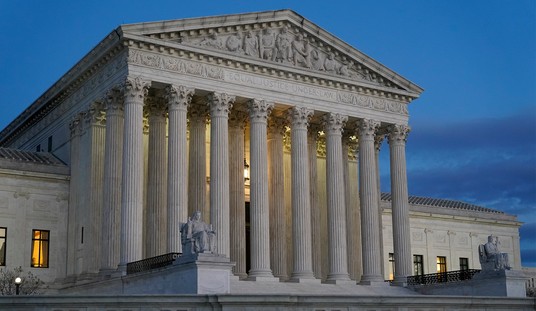
could overturn it. He cited the Second Amendment case the Supreme Court
agreed to consider as a fine example of strict constructionism and noted
that Judge Laurence Silberman read "The Federalist Papers" and other
writings and speeches at the time the Bill of Rights was written to see what
the authors intended.
With Hillary Clinton's numbers declining in Iowa, according to the latest
USA Today/Gallup Poll (his are, too) does he have a Plan B in case Obama
wins the nomination? "It's the same plan," he said. "The electoral map is
roughly the same for Hillary Clinton and Barack Obama." But this time, he
said, Republicans can't afford to allow the election to come down to one
state as occurred in 2000 (Florida) and 2004 (Ohio). He thinks he can
compete better in states that are close and even where Democrats are strong,
particularly in the Northeast and Midwest.
On personal matters, such as his three marriages, Giuliani says he should be
judged on his ability to do the job. He mentions that some of our greatest
presidents had personal failings. True, but let's see if he can sell that to
the "values voters." If Hillary Clinton is the nominee, he might. Possibly
less so if it's Obama. |