











Recessions happen. The stock market rises and falls. The question ought not
be about how the market is doing today, but about its net gain over the
years. Investing is about long-term economic commitment, not short-term
gratification.
During the slugfest that was the Democratic debate in South Carolina Monday
night, Sen. Hillary Clinton proposed a "quick fix" that would damage the
economy at least as badly as Richard Nixon's wage and price controls, or
efforts by the government to reverse the Great Depression, which arguably
was caused in large part by government intervention in and manipulation of a
free market economy.
Sen. Clinton said as president she would "have a moratorium on home
foreclosures for 90 days to try to help families work it out so that they
don't lose their homes." She would also "have an interest rate freeze for
five years, because these adjustable-rate mortgages, if they keep going up,
the problem will just get compounded. And we need more transparency in the
market."
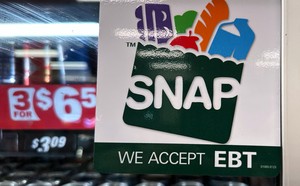
Then, in a version of George McGovern's guaranteed minimum income proposal
that helped sink his 1972 presidential candidacy, Clinton said, "I think we
need to give people about $650, if they qualify - which will be millions of
people - to help pay their energy bills this winter." Why not instead accept
payments offered by Venezuelan President Hugo Chavez? Former Rep. Joe
Kennedy regularly testifies in TV commercials to Chavez's concern for
America's poor. Chavez is offering discounted heating oil, courtesy of
Citgo, which is owned by the Venezuelan government.
In an interview with The New York Times, Sen. Clinton said as president she
would inject government more into the economy and rely less on market
forces. She specifically mentioned income inequality and economic excesses,
such as executive-pay packages, which she termed "offensive" and "wrong."
What is offensive and wrong is her notion that government is better than
free markets at producing wealth and spurring economic growth, when just the
opposite is true. The best way to reign-in "excessive" executive pay is for
stockholders to do it, not the federal government. And Sen. Clinton's
proposed $650 gift to those who "qualify" is no better than the Bush
administration's proposed cash handout to everyone. That money will most
likely be spent on products made in China, further enriching a nation that
is pursuing policies not in America's interests.
As Wall Street Journal editor Paul Gigot writes in an introduction to the
"2008 Index of Economic Freedom: The Link Between Economic Opportunity and
Prosperity" (co-produced by The Heritage Foundation), "The U.S. political
debate is moving in a negative direction as Œfairness' and income
redistribution replace growth as the policy lodestar and proposals for tax
increases proliferate."
Markets do best when government mostly leaves them alone, but Sen. Clinton,
who along with her husband has made - and Bill still makes - millions off
their notoriety and the selling of his presidency, are set for life, so what
do they care? They can pretend to care for "the little guy" even while
taking steps that harm everyone but themselves and their rich friends.
Income redistribution is socialism no matter what other label is attached to
it. There is a Commandment (the Eighth) against stealing, but when
government does it, it is called taxation. The results are the same. The
person out of whose pocket the money comes no longer has access to what he
has earned and the person (or government) that takes the money often wastes
it on things of which the earner would not approve.
The economy is adjusting because of greed, mortgages people couldn't afford
and should never have been given and because adjustments are normal in a
capitalistic system.
On Oct. 9, 2002, the Dow Jones Industrial Averages closed at 7,286.27. On
Oct. 9, 2007 it closed at an all-time high of 14,164.53. Those who were
invested in 2002 have made a lot of money. Those who buy now and stay
invested will make money. Now is the time for optimism, not meddling by the
federal government. What this economy needs is more freedom for the
individual and less manipulation by over-taxing, over-spending and
over-regulating government.
|