


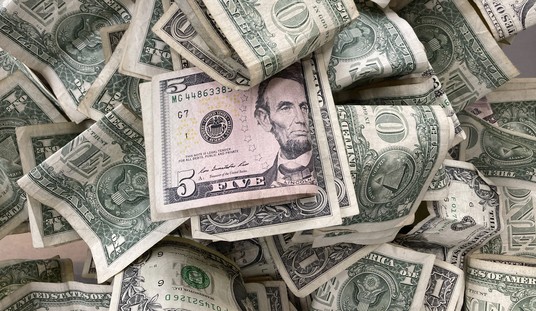









Since 2001 when "the war on terror" began, the Office of Management and
Budget (OMB) reports $649.9 billion has been appropriated for Operations
Iraqi Freedom and Enduring Freedom (Afghanistan). In the budget President
Bush just submitted to Congress, there is a request for an additional $108.1
billion for 2008 and $70 billion for 2009.
The cost of these wars has been largely borne by the American taxpayer,
while the benefits of success in Iraq and Afghanistan will reach far beyond
the borders of those countries to the world. If Islamic extremist can be
quelled in Afghanistan and Iraq, people the world over will literally
breathe freer. Since so many will benefit, isn't it fair to ask them to help
subsidize the effort?
USA Today reported last week that America's "allies" in the war on terror
have provided what amounts to chump change. Countries that made large
commitments to rebuild Iraq have paid just 16 percent of what they had
pledged. According to a new report by the Special Inspector General for Iraq
Reconstruction, other countries committed to contributions of $15.8 billion
during and after a conference in Madrid in October 2003. The countries that
have given the least are the ones that have the most resources to give - and
possibly the most to lose, as some are targets of al-Qaida's efforts to
replace Arab governments with Taliban-like leaders.
The largest shortfalls in pledges by 41 donor countries, according to USA
Today, are from Saudi Arabia and Kuwait who spent 17.4 percent and 27
percent of the $500 million each had pledged, according to a separate report
released last month by the Government Accountability Office. These are
countries we saved in the first Gulf War. So far they have paid just $135
million (Kuwait) and $87 million (Saudi Arabia) out of a combined total
commitment of $1 billion. That's still pocket change compared to the
hundreds of billions it is costing us.
This is beyond outrageous. Here we are spending near record amounts on
gasoline and home heating oil - money that goes to those nations that sell
us the oil - and they in turn refuse to pay more to help win a war who's
victory would help repel the same fanatics who also hate them.
Rep. Gary Ackerman, who chairs the House Foreign Affairs subcommittee on the
Middle East, makes the point: "They're charging $100 per barrel of oil,
making record fortunes, lecturing everyone else, and then they stiff
everybody, including their cousins who they contend to be so very concerned
about."
The figures back him up. According to the Department of Energy, "from 2003
through 2006, Saudi Arabia exported about $95 billion in crude oil to the
United States, as its average price doubled from $25 to $56 a barrel."
During his visit last month to the Middle East, President Bush obtained more
promises from several leaders of Arab states to do more. We'll see if those
pledges have any more currency than previous unfulfilled promises.
The under-responsiveness has not just been in the Arab world. Money and
other forms of assistance have been lacking from countries that are also
threatened by Islamic extremists. Spain seems to have come closest to
fulfilling its pledge. The GAO says of the $248 million Spain promised, it
has paid $213.7 million so far. And Japan, according to a recent report to
Congress, has pledged and disbursed more assistance to Iraq than any other
individual country except the United States.
At a minimum, we should send Iraq and Afghanistan a bill for what we have
done and are trying to do for them, or ask for price cuts on Iraqi oil.
Thousands of American lives have been lost and the financial cost is
enormous, as we seek to advance freedom for others. While a freer world is
also in America's interests, the people of Iraq and Afghanistan stand to
benefit the most. To have these and other nations in the region receive what
amounts to welfare while charging us top dollar for oil - and using some of
those profits to underwrite radical Islamic extremism - is doubly offensive.
|