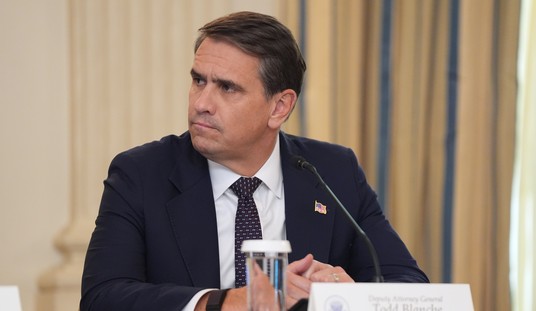
WASHINGTON -- Having learned the lessons of the Bork fiasco, when Teddy Kennedy libeled Robert Bork on the floor of the Senate within minutes of Bork's nomination -- a speech that became the reference point for the entire nomination fight -- this White House put its new man out front first. The television tableau was perfect. President introduces attractive, boyish-looking, hornless judge to the nation, with wife in the wings and two adorable kids in tow. A John Edwards moment. As impressive as the choreography are the president's ambitions. He remains committed to doing big things. The president who has set reforming Social Security as the centerpiece of his domestic policy and democratizing the entire Middle East as the centerpiece of his foreign policy was obviously interested in making history with his first Supreme Court appointment.
And there were two kinds of history available to him -- ethnic or ideological: nominating the first Hispanic, which is a history of sorts, or nominating a young judge who would move the court to the right for the next 25 years. Bush eschewed the more superficial option and went for the real thing.
Or so he thought. But did he?
John Roberts is obviously a brilliant lawyer with a history of attachment to conservative administrations. On constitutional matters, however, he is a tabula rasa. He's been an advocate advancing his clients' opinion and interests. That tells us little. And in just two years as a circuit court judge he's made no great, or even important, pronouncements. Nor does Roberts have significant speeches or law review articles to his name. If he has a judicial philosophy, we don't know it. Nor does he -- having told the Senate Judiciary Committee in 2003 ``I think I'd have to say that I don't have an overarching, uniform philosophy."
In the absence of a record, there has been a search for scraps, such as a five-paragraph dissent on the case of the arroyo toad. It's a federalism case in which Roberts dissented from the opinion that the Endangered Species Act allows the federal government to prohibit a developer from putting up a fence that would impede the movements of said toad.
The cover for the ESA is of course the interstate commerce clause, which is the wedge by which the federal government has become the regulatory state never intended by the Founders. Roberts seems to want to limit the commerce clause to permit federal jurisdiction only when the activity itself is interstate. If only the toad would schlep itself even occasionally to Reno, Roberts would gladly enjoin anyone who would molest it. Unfortunately, Roberts points out drolly, the ``hapless toad ... for reasons of its own, lives its entire life in California.''
This is a thin reed on which to hang a constitutional philosophy. But it's about all we got. Does this portend a justice who will demolish the underpinnings of the regulatory state and seven decades of commerce clause precedent?
Who knows. But I doubt it. Remember, in the most recent commerce clause review, the California marijuana case, even Antonin Scalia, no enemy of the wrecking ball, refused to follow Clarence Thomas in using the case to undermine the very expansive modern interpretation of the commerce clause. Continued... |