



























Now that the "realists" have ridden into town gleefully consigning the Bush doctrine to the ash heap of history, everyone has discovered the notion of interests, as if it were some new idea thought up by James Baker and the Iraq Study Group.

What do people think we've been doing for the last five years? True, the president's rhetoric has a tendency to go soaringly Wilsonian, e.g. the banishing tyranny stuff in his second inaugural address. But our policies of democratization in Iraq and Afghanistan and Lebanon have been deeply rooted in the most concrete of American interests.
If we really had been in the grip of "idealism," we'd be deep in Chad and Burma and Darfur. We are not. We are instead trying to sustain fragile democracies in three strategically important countries -- Afghanistan, Iraq and Lebanon -- that form the geographic parentheses around the principal threat to Western interests in the region, the Syria-Iran axis.
We are trying to bring democracy to Iraq in particular because a pro-Western government enjoying legitimacy and popular support would have been the most enduring means of securing our interests there. Deposing Saddam & Sons was essential because they posed a permanent strategic threat to the region and to U.S. interests. But their successor -- the popularly elected Maliki government -- has failed.
The cause of that failure is rooted in an Iraqi political culture that makes it as yet impossible for enough of the political leadership to act with a sense of national consciousness. We should nonetheless make a last effort to change the composition of the government and assemble a new one composed of those -- Kurds, moderate Sunnis, secular Shiites and some of the religious Shiites -- who might be capable of reaching a grand political settlement.
Everyone now says that the key to stopping the fighting in Iraq is political -- again, as if this were another great discovery. It's been clear for at least a year that a military solution to the insurgency was out of our reach. The military price would have been prohibitive and the victory ephemeral without a political compromise. And that kind of compromise -- vesting the Sunnis with proportionate political and financial (i.e. oil) power -- is something the Shiites, at least those now comprising the Maliki government, seem incapable of doing.
The U.S. should be giving Prime Minister Nouri al-Maliki a clear ultimatum: if he does not come up with a political solution in two months or cede power to a new coalition that will, the U.S. will abandon the Green Zone, retire to its bases, move much of its personnel to Kurdistan where we are welcome and safe, and let the civil war take its course. Let the current Green Zone-protected Iraqi politicians who take their cue from Moqtada al-Sadr face the insurgency alone. That might concentrate their minds on either making a generous offer to the Sunnis or stepping aside for a new coalition that would.
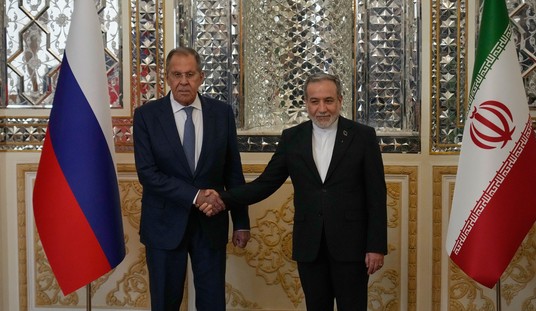
The key to progress is political change within Iraq. The newest fashion, however, is to go ``regional,'' engaging Iran and Syria in order to have them pull our chestnuts out of the fire. This idea rests on the notion that both Iran and Syria have an interest in stability in Iraq.
Continued... |