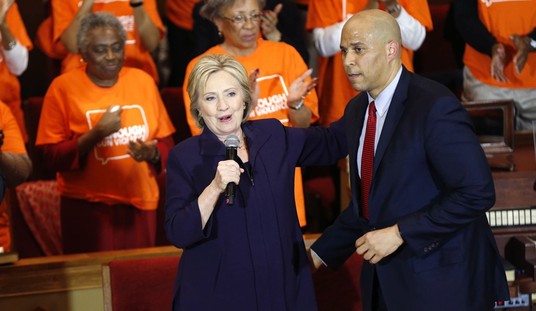








WASHINGTON -- Hillary Clinton is a fighter. She says so repeatedly in her stump speech at every campaign stop. If she wins the nomination and is elected president, she will fight the oil companies, drug manufacturers, insurance firms, the wealthy and, of course, the Republicans.
She proudly boasts that she has had to fight her critics throughout the scandal-plagued Clinton years, that she knows how to throw a punch and that she's still standing. Fighting is in her DNA; it's part of her political game plan; and it will be the hallmark of her presidency. Her speeches are peppered with the words "fight," "fighter" and "fighting."
If you want a president who is going to start off her administration with a good, long brawl, she's your candidate.
Barack Obama rarely if ever talks in terms of fighting. Instead, he speaks about "ending that chapter" in the Clintons' combative presidency, "turning the page" and "moving on." His campaign mantra is all about unifying the country, working together, ending the bickering and backbiting, seeking "common ground" and getting things done in Congress.
It goes without saying that it is impossible to avoid fights in government, which is divided between three co-equal branches that often disagree with one another. The Founding Fathers set it up that way to make it as hard as possible to impose bad laws on the people. Democracy is in large part about one point of view in conflict with another until all sides can work out their differences, though sometimes gridlock (in the absence of bad laws) is the better alternative.
Obama, who is running on a long laundry list of spending giveaways and policy changes, will undoubtedly have to fight for his agenda because it will face a lot of opposition on Capitol Hill and not just from Republicans.
Americans, it is said, love a good political fight, but that love affair has cooled in recent years (though not among Clinton's fighters). Polls say that voters are fed up with the constant fighting in Washington and want it to stop.
As this is written, it appears that Obama's "bring us together" message is more popular than Clinton's war cry, judging from his primary victories and his lead among pledged delegates. But this race probably has a ways to go yet.
Meanwhile, Clinton isn't limiting her fights to just corporations; she is now trading blows with two of America's biggest trading partners, Canada and Mexico, over the North American Free Trade Agreement (NAFTA).
Pandering to Democratic voters in Ohio, whose economy has been hit hard by manufacturing job losses, she says NAFTA is the chief reason for the state's rising unemployment.
Never mind that most labor-intensive factory job losses are the result of a long trend in technological changes in manufacturing that allows us to make things with fewer workers at a lower cost. Nor that she herself was a supporter of NAFTA, which her husband signed into law and counted as one of his major economic success stories.
Trade between countries can never by definition be evenly balanced, but many more jobs are created because of it than are lost. We export more than $1.3 trillion worth of stuff each year because of trade deals, and that figure is rising.
It works both ways. We hear a lot about outsourcing, but very little, if anything, about the millions of U.S. workers employed as a result of "in-sourcing," or foreign investment. Toyota plants, to choose one example, provide a lot of good-paying jobs for American workers.
Continued... |