``The interest of the man must be connected with the constitutional rights of the place.'' -- James Madison Federalist 51 WASHINGTON -- That was the crux of the president's Monday evening speech. It had a minimum of Jeffersonian dogmatism about the universal eligibility for democracy, and instead stressed hardheaded Madisonian measures to strengthen incentives for civilized behavior. His plan is to connect the interests of an Iraqi majority with genuinely Iraqi institutions of representation.
Iraq needs less violence and more politics. The former probably requires more of a U.S. presence, the latter requires less. If there is a way to reconcile these imperatives, and there may not be, it is by a Madisonian connection: A government supported by sufficient Iraqi factions must feel a life-or-death stake in the success of the U.S. war -- and such it shall largely remain -- against the insurgents.
The complex business of organizing connections through elections should be the only serious business of the post-June 30 ``interim'' government being concocted by United Nations envoy Lakhdar Brahimi. Unfortunately, his foolish plan for government by supposedly apolitical ``technocrats'' -- people such as he falsely purports to be -- has a notable pedigree.
Friedrich Engels, echoing Saint-Simon and the French enlightenment, anticipated ``the government of persons'' being replaced by ``the administration of things.'' Ah, yes: When the last king had been strangled by the entrails of the last priest, pure reason would be enthroned at last, and everyone would agree about everything.
Iraq is not yet quite so reasonable. There the guiding idea should be Henry Adams' definition of politics: ``the systematic organization of hatreds.'' Even more than oil, hatreds are Iraq's awesome abundance. However, political parties are required to give systematic organization to politics, and Iraq's parties will, inevitably, be sectarian, hence not enamored of compromise.
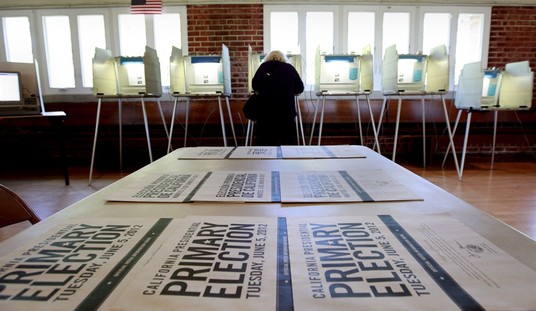
The president's five-step plan for incremental progress toward representative government also must surmount Iraq's deficit of basic civic mores. The New York Times reports that 1st Lt. Erik Iliff, of Columbia, S.C., was in charge -- he is 24 -- of December's elections to a Baghdad neighborhood council: ``First, the men tried to bar women from voting. Then they mobbed the ballot box. The lieutenant ended up handpicking three people for the seats.''
Downplaying the possibility that elections might produce an Islamic fundamentalist theocracy, Colin Powell says Iraqis know that ``to be successful as a 21st-century country'' and to have ``international acceptability,'' they must be ``a country that preserves human rights, that is founded on democracy, that respects the rights of all individuals and respects the rights of women, that respects basic tenets ... of human rights that all of us believe in.'' But international acceptability, in the form of seats on the U.N. Commission on Human Rights, has been conferred on Cuba, Libya, Syria and Sudan. And how many Iraqis define ``a successful 21st-century country'' as we do?
Elections will yield evidence. But elections and reconstruction -- KBR, the largest contractor in Iraq, has had 35 employees killed -- require a much lower level of violence, which requires winning the war, which may mean more U.S. forces. Continued... |