

















Townhall.com, Where Your Opinion Counts
Talk Radio:   Bill Bennett   Mike Gallagher   Dennis Prager   Michael Medved   Hugh Hewitt   
BREAKING NEWS  LeftArrow - Townhall.com   RightArrow - Townhall.com  
Columns, funnies & more in your inbox!
Tuesday, August 15, 2006
George Will :: Townhall.com Columnist
Stability in the Middle East is an illusion
by George Will
Vote on It:
Average Vote:
[+] Text [-]
 
Poll
Are Barack Obama's friends -- like Bill Ayers -- legitimate political issues?

WASHINGTON -- Five weeks have passed since the kidnapping of two Israeli soldiers provoked Israel to launch its most unsatisfactory military operation in 58 years. What problem has been solved, or even ameliorated?

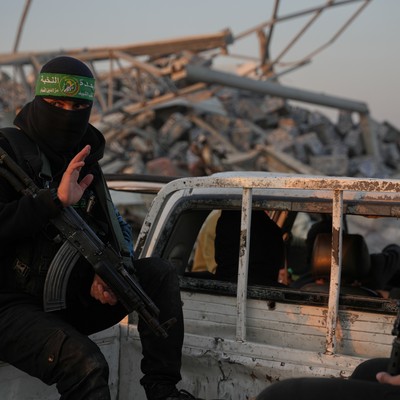
Hezbollah, often using World War II-vintage rockets, has demonstrated the inadequacy of Israel's policy of unilateral disengagement -- from Lebanon, Gaza, much of the West Bank -- behind a fence. Hezbollah has willingly suffered (temporary) military diminution in exchange for enormous political enlargement. Hitherto, Hezbollah in Lebanon was a ``state within a state.'' Henceforth, the Lebanese state may be an appendage of Hezbollah, as the collapsing Palestinian Authority is an appendage of the terrorist organization Hamas. Hezbollah is an army that, having frustrated the regional superpower, suddenly embodies, as no Arab state ever has, Arab valor vindicated in combat with Israel.

Only twice in the U.N.'s six decades has it authorized the use of substantial force -- in 1950 regarding Korea and 1990 regarding Kuwait. It still has not authorized force in Lebanon. What is being called a ``cease-fire'' resolution calls for Israel to stop all ``offensive'' operations. Israel, however, reasonably says that its entire effort is defensive. The resolution calls for Hezbollah to stop ``all attacks.'' The U.N., however, has twice resolved that Hezbollah should be disarmed, yet has not willed the means to that end. Regarding force now, the U.N. merely ``expresses its intention to consider in a later resolution further enhancements'' of the U.N. force that for 28 years has been loitering without serious intent in south Lebanon.

The ``new Middle East,'' the ``birth pangs'' of which we supposedly are witnessing, reflects the region's oldest tradition, the tribalism that preceded nations. The faux and disintegrating nation of Iraq, from which the middle class, the hope of stability, is fleeing, has experienced in these five weeks many more violent deaths than have occurred in Lebanon and Israel. U.S. Gen. George Casey says 60 percent of Iraqis recently killed are victims of Shiite death squads. Some are associated with the Shiite-controlled Interior Ministry, which resembles a terrorist organization.

The London plot against civil aviation confirmed a theme of an illuminating new book, Lawrence Wright's ``The Looming Tower: Al-Qaeda and the Road to 9/11.'' The theme is that better law enforcement, which probably could have prevented 9/11, is central to combating terrorism. F-16s are not useful tools against terrorism that issues from places such as Hamburg (where Mohamed Atta lived before dying in the North Tower of the World Trade Center) and High Wycombe, England.

Cooperation between Pakistani and British law enforcement (the British draw upon useful experience combating IRA terrorism) has validated John Kerry's belief (as paraphrased by The New York Times Magazine of Oct. 10, 2004) that ``many of the interdiction tactics that cripple drug lords, including governments working jointly to share intelligence, patrol borders and force banks to identify suspicious customers, can also be some of the most useful tools in the war on terror.'' In a candidates debate in South Carolina (Jan. 29, 2004), Kerry said that although the war on terror will be ``occasionally military,'' it is ``primarily an intelligence and law enforcement operation that requires cooperation around the world.''

Immediately after the London plot was disrupted, a ``senior administration official,'' insisting on anonymity for his or her splenetic words, denied the obvious, that Kerry had a point. The official told The Weekly Standard:

``The idea that the jihadists would all be peaceful, warm, loveable, God-fearing people if it weren't for U.S. policies strikes me as not a valid idea. (Democrats) do not have the understanding or the commitment to take on these forces. It's like John Kerry. The law enforcement approach doesn't work.''

This farrago of caricature and non sequitur makes the administration seem eager to repel all but the delusional. But perhaps such rhetoric reflects the intellectual contortions required to sustain the illusion that the war in Iraq is central to the war on terrorism, and that the war, unlike ``the law enforcement approach,'' does ``work.''

The official is correct that it is wrong ``to think that somehow we are responsible -- that the actions of the jihadists are justified by U.S. policies.'' But few outside the fog of paranoia that is the blogosphere think like that. It is more dismaying that someone at the center of government considers it clever to talk like that. It is the language of foreign policy -- and domestic politics -- unrealism.

Foreign policy ``realists'' considered Middle East stability the goal. The realists' critics, who regard realism as reprehensibly unambitious, considered stability the problem. That problem has been solved.

Share:
Vote on It:
Average Vote:
 
About The Author
George F. Will is a 1976 Pulitzer Prize winner whose columns are syndicated in more than 400 magazines and newspapers worldwide.
 
TOWNHALL DAILY: Be the first to read George Will's column. Sign up today and receive Townhall.com daily lineup delivered each morning to your inbox.
Subject: A very weak article by George Will
I have learned a lot from George Will, but this article was a truly a weak effort, very disappointing.

Cause of Iraq's instability
No amount of Intelligence and Enforcement will eliminate, reduce or control the destabilizing effects that Syria and Iran are having on Iraqi democratic efforts.

We'll never know that any kind of democracy will work in Iraq until the destabilizing influence of Syria and Iran are removed.

Negotiating with Syria and Iran is futile, they have to be stopped at the source, i.e. kill them, and that means military action.

To protect ourselves we need to find the right mix of Intelligence, Enforcement and Military action. Bush is closer to the right mix than Kerry, although the Bush administration has still been weak in prosecuting the war on terror at the root: Iraq and Afghanistan was a start but Iran and Syria must fall ... militarily, if we are going to succeed.

We all agree that even in the US, the terrorists only have to be right once and we have to be right every time, that is the reason we have to root out terrorism at the source, militarily, in the case of Syria and Iran (while at the same time expanding and improving our Intelligence and Enforcement through the Patriot Act, NSA, etc).
Sign Up to Post Your CommentsSign Up to Post Your Comments
If you are already registered, click here to login. Otherwise, please take a few seconds to register with Townhall.com. Once you sign up, you’ll be able to post your comments immediately, use the action center, get podcasts, and more!
Note: Fields marked with a red asterisk (*) are required.
Salutation:
First Name:
*
Last Name:
*
Email:
*
Nickname:
*
Note: Nick name will be shown when you post comments.
Address 1:
*
Address 2:
City:
*
State:
*
Zip:
*
Phone:
      
Your daily dose of conservative columns, editorial cartoons, talk radio, news, and more!
(Bi-Weekly) We highlight the best opportunities from our partners for surveys, action items and more.