









Townhall.com, Where Your Opinion Counts
Talk Radio:   Bill Bennett   Mike Gallagher   Dennis Prager   Michael Medved   Hugh Hewitt   
TOP NEWS   LeftArrow - Townhall.com   RightArrow - Townhall.com  
Columns, funnies & more in your inbox!
Sunday, December 31, 2006
George Will :: Townhall.com Columnist
Political speech makes a comeback
by George Will
Vote on It:
Average Vote:
[+] Text [-]
 
Poll
How much of the Republican convention did you watch?


WASHINGTON -- A three-judge federal court recently tugged a thread that may begin the unraveling of the fabric of murky laws and regulations that traduce the First Amendment by suppressing political speech. Divided 2-1, the court held -- unremarkably, you might think -- that issue advocacy ads can run during an election, when they matter most. This decision will strike zealous (there is no other kind) advocates of ever-tighter regulation of political speech (campaign finance ``reformers'') as ominous. Why? Because it partially emancipates millions of Americans who incorporate thousands of groups to advocate their causes, groups such as the ACLU and the NRA.

And Wisconsin Right to Life. It is another organization by which people assemble (see the First Amendment) to speak (see it again) in order to seek redress of grievances (the Amendment, one more time). In 2004, WRTL was distressed because Wisconsin's senators, Russ Feingold and Herb Kohl, were helping to block confirmation votes on some of President Bush's judicial nominees, wanted to run ads urging people to ``contact Senators Feingold and Kohl and tell them to oppose the filibuster.''

But Feingold was running for re-election, and the McCain-Feingold ``reform'' makes it a crime for entities such as WRTL to use their corporate funds to broadcast an ``electioneering communication'' within 30 days of a primary or 60 days of a general election. An ``electioneering communication'' is one that ``refers to'' a candidate for federal office.

Although in 2003 the Supreme Court upheld McCain-Feingold, the court later said it would consider appeals against the law ``as applied.'' The majority on the three-judge court, preserving the distinction between electioneering and grass-roots lobbying, held that WRTL's ads were exempt from the McCain-Feingold election-eve blackouts of speech because the ads were not ``coordinated'' with a candidate's campaign and did not engage in ``express advocacy'' -- did not use the words ``vote for'' or ``vote against'' a candidate.

The dissenting judge wanted to examine the ``intent'' of the ads by examining their ``context,'' looking for clues as to whether the sponsor of the ads hoped to not only advocate an issue but to influence an election. Imagine: Judges scouring the political landscape, searching for evidence (people's past opinions or associations; e-mails and other communications) that would empower them to rule that grass-roots lobbying about an issue is ``really'' the functional equivalent of electioneering (express advocacy).

Such a process would necessarily be so protracted that no challenged ad could be authorized in time for an election. Besides, Bob Bauer, a Democratic campaign lawyer, rightly warns that the prospect of such inquiries should ``make a sensible citizen's blood run cold.'' An uncircumscribed inquiry into ``intent'' would become ``an intrusive process'' in which an organization's internal communications would be subpoenaed and political operatives and consultants would be ``put under oath and questioned about what they meant and intended and thought.''

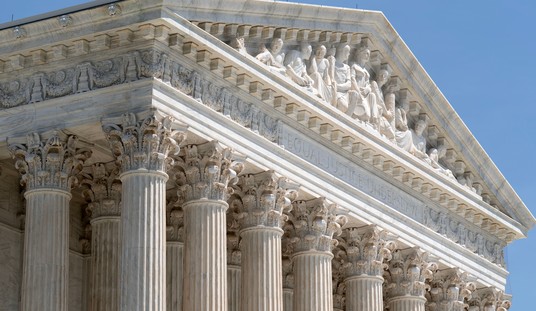
The WRTL case is probably heading for the Supreme Court. There Justice Samuel Alito occupies the chair that Sandra Day O'Connor occupied when she voted with the majority in the 5-4 ruling that upheld McCain-Feingold.

Still, the reformers' zeal for regulating speech is undiminished. The Federal Election Commission recently fined some ``527'' groups (named for the tax code provision under which they organize) $630,000. Their offense? Issue advocacy in 2004 that, ``taken as a whole,'' could ``only be interpreted by a reasonable person as containing the advocacy of the election or defeat'' of a federal candidate. Editorial writers at The New York Times and The Washington Post, ever eager to regulate political advocacy not done by newspaper editorial writers, approved, although the Times thought the fines insufficient, and although the Post, calling the current law ``murky,'' thought the FEC should have enforced the murkiness quicker.

The Times no longer bothers to pretend that its rationale for speech regulation is fear of corruption or the appearance thereof. Rather, the Times justifies suppressing 527s on aesthetic grounds -- they are run by ``hard-edged activists'' and their ads are too negative. Presumably, suppressing 527s will elevate political discourse -- and, presumably, it is the government's business to enforce the elevation. The Post also is tellingly silent about the reformers' original corruption rationale for rationing political speech by restricting the political money that finances it. Instead, the Post says 527s wield ``significant'' -- by implication, excessive (relative to the Post's?) -- influence.

Bauer wonders why, absent a compelling government interest in combating corruption, unregulated speech resulting in influence should be a federal offense. When, as surely it will, the Supreme Court considers that question, it can begin undoing the damage it did affirming McCain-Feingold and licensing government to ration political speech.

Share:
Vote on It:
Average Vote:
 
About The Author
George F. Will is a 1976 Pulitzer Prize winner whose columns are syndicated in more than 400 magazines and newspapers worldwide.
 
TOWNHALL DAILY: Be the first to read George Will's column. Sign up today and receive Townhall.com daily lineup delivered each morning to your inbox.
Subject: An Hypothetical Situation
The Commodore & his Lady unto Townhall: greetings from the Time Tunnel, AZ.

Refers to the 1896 Presidential Election.

Businessmen told their employes that if Bryan won the popular vote, their companies would not sound off the work horn the next morning to summon the employes to work.

So: use the same tactics: if Hillary wins the popular vote in a given state in 2008, the lockout occurs and the business moves South to Mexico, not under Federal or State jurisdiction.

So, what do the employes do? Vote Hillary or save their jobs, under the force maejure clause that is part of every union contract? Or as Delta and other airlines have done, use the bankruptcy laws to abrogate company pensions?

So, DTOM,
what I hear you saying is that we need a test case to elevate to the level of the USSC. What are the penalties for violating this unconstitutional law?
Sign Up to Post Your CommentsSign Up to Post Your Comments
If you are already registered, click here to login. Otherwise, please take a few seconds to register with Townhall.com. Once you sign up, you’ll be able to post your comments immediately, use the action center, get podcasts, and more!
Note: Fields marked with a red asterisk (*) are required.
Salutation:
First Name:
*
Last Name:
*
Email:
*
Nickname:
*
Note: Nick name will be shown when you post comments.
Address 1:
*
Address 2:
City:
*
State:
*
Zip:
*
Phone:
      
Your daily dose of conservative columns, editorial cartoons, talk radio, news, and more!
(Bi-Weekly) We highlight the best opportunities from our partners for surveys, action items and more.