Townhall.com, Where Your Opinion Counts
Talk Radio:   Bill Bennett   Mike Gallagher   Dennis Prager   Michael Medved   Hugh Hewitt   
BREAKING NEWS  LeftArrow - Townhall.com : Conservative, Political, Republican   RightArrow - Townhall.com : Conservative, Political, Republican  
Columns, funnies & more in your inbox!
Friday, March 29, 2002
Jacob Sullum :: Townhall.com Columnist
Quiet Time
by Jacob Sullum
Vote on It:
Average Vote:
[+] Text [-]
 
 
Poll
Who won Tuesday's presidential debate?


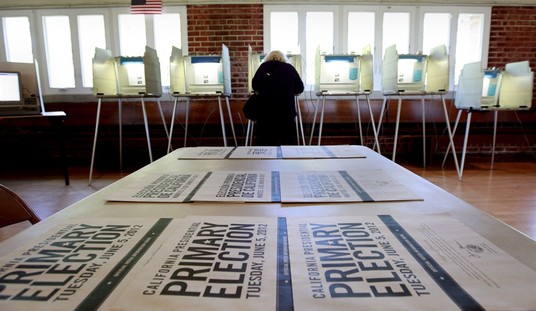
John McCain is an enemy of the First Amendment. The senator has graciously allowed me to say that in print, even in Arizona, even when he's up for re-election. But under McCain's Bipartisan Campaign Reform Act, recently signed by President Bush, the American Civil Liberties Union would be committing a crime if it called McCain an enemy of the First Amendment on TV at a time when voters were likely to be paying attention. The law prohibits unions, corporations and nonprofit organizations from sponsoring broadcast, satellite or cable communications that mention candidates for federal office within 30 days of a primary or 60 days of a general election. The only way around the ban is to set up a political action committee, contributions to which are strictly regulated. In practical terms, this means politicians will be shielded from criticism by independent groups ranging from the Sierra Club to the Pro-Life Action League during the months when their messages would have the most impact. It's easy to understand why members of Congress would welcome such relief. Why put up with attacks on your record if you can legislate them away? What's hard to understand is how anyone who takes seriously his duty to uphold the Constitution could support such a blatant infringement on freedom of speech. Bush said he had "reservations about the constitutionality of the broad ban on issue advertising, which restrains the speech of a wide variety of groups on issues of public import in the months closest to an election." Apparently forgetting the oath he took last year, he decided it wasn't his job to worry about the Constitution. "I expect the courts will resolve these legitimate legal questions," he said. It should not be a tough call. No one disputes that the First Amendment applies to opinions about who should run the government and what the government should do. Yet in the topsy-turvy world of the Bipartisan Campaign Reform Act, the closer speech gets to the sort of political expression the Framers clearly meant to protect, the more restricted it is. An organization may criticize a politician, so long as the message is timed so that it's not likely to change anyone's vote. Or it may discuss an issue, so long as it does not mention a particular official's position on it. What it may not do is engage in "electioneering communication" -- speech that might actually have a political impact. These restrictions do not apply to news organizations, which helps explain why so many of them looked favorably on campaign finance reform. (For newspapers and magazines, as Reason's Jeff Taylor has noted, there was also the possibility of attracting ad revenue that would otherwise go to TV and radio stations.) Unlike environmentalists and anti-abortion activists, journalists remain free to discuss the merits of candidates at any time and in any terms they choose. The National Rifle Association, the first group to file a complaint challenging the campaign law, observed that "Congress has essentially granted speech licenses to giant corporate conglomerates such as Viacom, Disney Corporation and General Electric Company by allowing these corporations unlimited rights to spend money talking about issues and candidates, while silencing the voices of ordinary citizens and citizen groups." The bill's supporters knew they'd end up in court, but they were determined to close what they considered a dangerous loophole in the law: Although barred from engaging in "express advocacy," independent groups could still run "issue ads" that fell short of explicit calls for a candidate's election or defeat. The rule against express advocacy had little practical consequence, since it was pretty clear what a group wanted voters to do when it slammed a candidate right before an election. But the problem here is not the loophole; it's the rule. Seeking to restrict campaign contributions, Congress tried to prevent the money from flowing to independently sponsored election ads. Having concluded that issue ads accomplish much the same purpose, it decided to outlaw those. A quarter of a century ago, the U.S. Supreme Court ruled that restrictions on campaign spending were unconstitutional because they amounted to restrictions on speech. By now it is abundantly clear that the same is true of restrictions on campaign contributions. These limits cannot be enforced without trampling on the rights of the citizen who cares so passionately about an issue that he is willing to put his money where his mouth is.
Share:
Vote on It:
Average Vote:
 
About The Author
Jacob Sullum is a senior editor at Reason magazine and a contributing columnist on Townhall.com.
 
TOWNHALL DAILY: Be the first to read Jacob Sullum's column. Sign up today and receive Townhall.com daily lineup delivered each morning to your inbox.
 
©Creators Syndicate
Sign Up to Post Your CommentsSign Up to Post Your Comments
If you are already registered, click here to login. Otherwise, please take a few seconds to register with Townhall.com. Once you sign up, you’ll be able to post your comments immediately, use the action center, get podcasts, and more!
Note: Fields marked with a red asterisk (*) are required.
Salutation:
First Name:
*
Last Name:
*
Email:
*
Nickname:
*
Note: Nick name will be shown when you post comments.
Address 1:
*
Address 2:
City:
*
State:
*
Zip:
*
Phone:
      
Your daily dose of conservative columns, editorial cartoons, talk radio, news, and more!
(Bi-Weekly) We highlight the best opportunities from our partners for surveys, action items and more.