















Townhall.com, Where Your Opinion Counts
Talk Radio:   Bill Bennett   Mike Gallagher   Dennis Prager   Michael Medved   Hugh Hewitt   
TOP NEWS   LeftArrow - Townhall.com   RightArrow - Townhall.com  
Columns, funnies & more in your inbox!
Wednesday, October 18, 2006
John Stossel :: Townhall.com Columnist
Trade restrictions stick it to consumers
by John Stossel
Vote on It:
Average Vote:
[+] Text [-]
 
 
Poll
What do you think of John McCain's selection of Alaska Gov. Sarah Palin as his running mate?


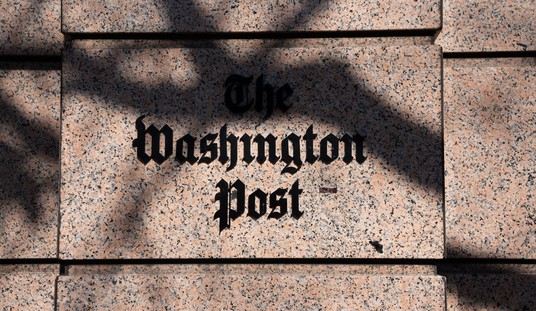
The Washington Post wants us to think that Anita Dungey won a heroic small-business victory over big business. But all she really did was stick it to American consumers and punish workers in some poor country.

Dungey's family owns Auburn Leathercrafters in upstate New York, a company that makes dog collars and leashes, some as expensive as $100. Thanks to a tariff on its foreign competitors, Leathercrafters can charge more for its products than it could charge in a free and competitive market.

Recently Dungey discovered that Congress, exercising a little-known power and urged on by Wal-Mart, was about to suspend the tariff for three years. She panicked. Loss of the restriction on her competitors would have been "devastating" for her, she said. "The suspension is . . . just about long enough to put most of the small guys out of business."

So, in the words of the Post, she "launched a one-woman campaign against four bills" that would have suspended the tariff. Her campaign succeeded. The suspension was cancelled.

The Post reported the story as a David-versus-Goliath tale." [T]ax breaks delivered to corporations in the form of tariff suspensions have gone largely without public notice," said the Post.

What? How can the removal of a tariff from a foreign company be a tax break for an American company? A tariff taxes foreign goods and helps domestic manufactures charge higher prices than they could in a free market. By any definition, that's a special-interest privilege. Government interferes with free trade to help favored businesses. But if a tariff is a privilege, how can suspension of a tariff also be a privilege? I guess in the topsy-turvy world of Washington, everything government does -- or doesn't do -- is a privilege for someone.

Thanks to the tariff Dungey's company enjoys, you and I are forbidden to buy cheaper dog collars from foreigners eager to sell them to us through Wal-Mart. Those foreign collars are probably made by workers with very low incomes. Selling their products in the big American market gives them a chance to climb out of poverty. The tariff is a blow against them in favor of the tony items sold by Leathercrafters. How is that fair?

The Post also claimed that Congress's power to suspend tariffs "cost taxpayers hundreds of millions of dollars in lost revenue." But anyone who thinks tariffs are good for taxpayers needs to wake up and smell the money. The only way a tariff can produce tax revenue is by forcing consumers to pay more for things they want. So whatever taxpayers seem to gain through tariffs is cancelled out by what consumers lose in higher prices. Defenders of tariffs look at only one side of the ledger while pretending that a dollar in your pocket is equivalent to a dollar in a government account. I'd rather have the dollar in my pocket.

I am sympathetic with those who dislike the influence-peddling involved in selective tariff suspensions. But there's an easy answer to that: Get rid of all tariffs permanently!

A free and competitive economy -- meaning free trade and no tariffs -- is the best deal for consumers. So let's get the politicians out of the way. If they have no privileges to dispense, no special interests will be lining up to influence them.

Share:
Vote on It:
Average Vote:
 
About The Author
John Stossel is an award-winning news correspondent and author of Myths, Lies, and Downright Stupidity: Get Out the Shovel--Why Everything You Know is Wrong.
 
TOWNHALL DAILY: Be the first to read John Stossel's column. Sign up today and receive Townhall.com daily lineup delivered each morning to your inbox.
 
©Creators Syndicate
Subject: Not Silly. True.
BS Detector said:

(((Silly. If Americans choose to pay higher prices for American-made goods, great. But if they don't, they shouldn't be forced to pay higher prices for foreign goods. ))))

Nobody's talking about force. I'm talking about a little thing called PATRIOTISM, which means considering the benefits and costs beyond our immediate whims. People want to save 42 cents on that hammer without ever thinking about the long term consequences of their choice. To heck with the fact that every dime they spend with the Chi-Coms is melted down and turned into a bullet that will one day be aimed at some young American's head. Oh, well. At least BS Detector saved 42 cents on his hammer.

((((A tool for what? Consumer misery? Protecting the jobs of a small minority at the expense of everybody else? ))))

A tool for leveling the playing field. The Chi-Coms (and others) employ de facto slaves and reap the benefits of ridiculously cheap labor ( but I guess we needn't consider the human misery of slaves, 'cuz the consumer, again, is all that matters). You have it exactly backwards. Vast populations suffer so that a few consumers can enjoy the fruits of cheap labor. That's wrong, and it's lousy for America's long term interests. No one is talking about "protecting" jobs; we're talking about giving them a competitive, fighting chance.

((((The ONLY way that trade barriers can be a tool is if the target sees our sanctions as being more damaging to them than they can bear, and they are then willing to negotiate reductions.))))

No, that's not the only way, but it is one way. And it works. Equalization might also take the form of the other side removing restrictions and tariffs that work against us, thus leveling the field. I would think "free traders" would appreciate such a development. But such developments will never happen if we don't push back a little. We've made it way too easy for them to hose us.

((((And as a nation, we still win, because the items we buy cost less. Certainly, we don't win as much as we would if there were no trade restrictions on either end, but we're still definitely ahead of where we would be if we were to keep those lower-cost goods away from our consumers. What gives you the right do decide what I should or should not buy?)))))

I'm not deciding what you should buy, but maybe you should be a little more judicious. The choice would still be there for you to buy the slave-produced dog collar or hammer, but the price would be a little more in line with a fair trade environement.

(((((What a broad, unsupportable claim. In what way does free trade cost the majority of Americans ANYTHING?)))))

You're right. Not a single factory job has been lost to "free trade". Our industrial base is absolutely in the pink. The claim is only unsupportable if you live in a bubble a bubble (made in China, no doubt).

(((( God forbid we become an economy with something in common with the most successful business in the history of the world. ))))

I won't envoke God on this because the choice is ours. I'm not begrudging Walmart's success. I just don't think we should be content with them becoming our primary business.

One definition of a third world economy is one which exports mainly raw goods and imports most of its finished or produced goods. We're there,in part, thanks to the the short term Consumerist mentality.

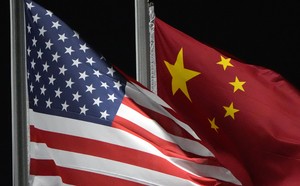
Real and actual free trade ( no quotes ) might be a positive thing, as I said before. But that's NOT what we have. We put a 1 or 2 percent tag on Chinese goods, and in exchange they nail our stuff with a 25 to 30 percent tag. Not fair. Not free. Not good for America.

Starspangledblogger wrote:

"Many free traders... think of Americans as consumers first and citizens second. Others never even consider the latter."

Silly. If Americans choose to pay higher prices for American-made goods, great. But if they don't, they shouldn't be forced to pay higher prices for foreign goods.

"But [tariffs] can also be a tremendously useful tool, particularly when dealing with unscrupulous parties like the Chinese, who have no problem levying massive tariffs on our goods."

A tool for what? Consumer misery? Protecting the jobs of a small minority at the expense of everybody else?

The ONLY way that trade barriers can be a tool is if the target sees our sanctions as being more damaging to them than they can bear, and they are then willing to negotiate reductions.

"This makes for a treacherously unlevel playing field."

And as a nation, we still win, because the items we buy cost less. Certainly, we don't win as much as we would if there were no trade restrictions on either end, but we're still definitely ahead of where we would be if we were to keep those lower-cost goods away from our consumers. What gives you the right do decide what I should or should not buy?

"As practiced today, the cost of supposedly free trade is way too high for the majority of Americans."

What a broad, unsupportable claim. In what way does free trade cost the majority of Americans ANYTHING?

"Unless we want to become a permanent Wal-mart economy, we better wake up and level the field a little."

God forbid we become an economy with something in common with the most successful business in the history of the world.

.
Sign Up to Post Your CommentsSign Up to Post Your Comments
If you are already registered, click here to login. Otherwise, please take a few seconds to register with Townhall.com. Once you sign up, you’ll be able to post your comments immediately, use the action center, get podcasts, and more!
Note: Fields marked with a red asterisk (*) are required.
Salutation:
First Name:
*
Last Name:
*
Email:
*
Nickname:
*
Note: Nick name will be shown when you post comments.
Address 1:
*
Address 2:
City:
*
State:
*
Zip:
*
Phone:
      
Your daily dose of conservative columns, editorial cartoons, talk radio, news, and more!
(Bi-Weekly) We highlight the best opportu