



I don't know about you, but when that Mega Millions or Powerball jackpot
gets really high, I like to go down to the local convenience store and ask
the good folks waiting for hours to buy a fistful of tickets, "Hey, do you
think Condi Rice should cut a deal with Bashar Assad?" Or, "Excuse me, sir,
I know you're busy filling out those little ovals for the same 78 numbers
you play every week, but I was wondering whether you think reimportation of
Canadian drugs is a good idea?" I mean, where better to find the distilled
genius of the vox populi than a line of people at the 7-Eleven who have a
lot of time to spare during working hours?
Nowhere, according to Dr. Mark Osterloh of Tucson, Ariz. Which is why he
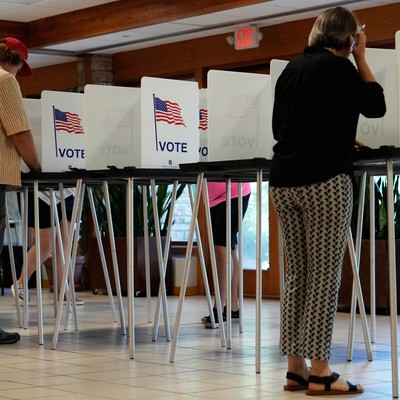
wants to get the lotto crowd to vote by turning elections into giant
lotteries. His idea, which has received undue national attention, is simple:
If you vote, you're automatically entered in a drawing for $1 million - and
perhaps some fabulous consolation prizes, too! His proposal will be on the
November ballot in Arizona, and he hopes it will revolutionize the country
by enlisting the lottery-line crowd to fix our democracy. He even has a
slogan: "Who wants to be a millionaire? Vote!"
Osterloh, an ophthalmologist and political activist (he ran for governor by
bicycling throughout the state a few years ago), is one of those classic
American cranks who has the audacity to take our civic cliches seriously.
Since the civil rights era, Americans have been indoctrinated with the
message that voting is the essential yardstick of citizenship.
Editorialists, civics teachers and an assortment of deep-thinking movie
stars residing in Periclean Hollywood have gone to great lengths to tell
Americans that voter apathy is a terrible evil and that, conversely, high
voter turnout is a sign of civic health.
Indeed, for several years, voting rights activists have been pushing to give
prison inmates and younger teenagers the right to vote, presuming that
giving rapists, killers and Justin Timberlake fans a bigger say will improve
our democratic process.
The push to make voting much easier has been considerably less
controversial. Weekend voting, voting by mail and online voting are
constantly greeted as vital reforms of our electoral system. And although
some of these reforms are probably benign, all assume that even the
slightest inconvenience in voting is an outrage because democratic health is
purely a numbers game: More voters equals a healthier society. My own view
is that voting should be more difficult because things of value usually
require a little work. That goes for citizenship, too.
Consider Internet voting. In the conventional view, the only legitimate
criticism of online voting is its susceptibility to fraud. Almost no one
questions its advisability if it worked - even though online voting assumes
that we desperately need to hear from people who otherwise couldn't be
bothered to get off the couch. Voting fetishists often liken democracy to a
national "conversation" or "dialogue." So, tell me: What intelligent
conversation is aided by the intrusion of Beavis and Butt-Head?
What is surprising about Doc Osterloh's wacky idea is that the franchise
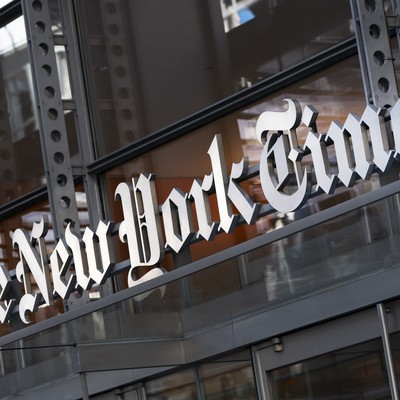
maximizers hate it. The New York Times dubbed it "daft" and "one of the
cheesier propositions on the November ballot." USA Today called it "tawdry."
Fair enough.
But I think part of the reason they're so scandalized is that Osterloh is
taking their logic to its natural conclusion. Advocates of increasing voter
turnout already frame the issue in terms of "what's in it for you." MTV's
condescending Choose or Lose campaign, which aims to get 18- to 30-year-olds
to vote, says it all right there in the name; the gravy train is leaving the
station, and the ballot is your ticket onboard.
Just beneath the surface of much of this voter activism is the assumption
that increased turnout would move American politics to the left, by
redistributing wealth to the poor and disenfranchised. There's probably some
merit here, which explains why so many get-out-the-vote groups are proxies
for the Democratic Party. But that doesn't change the fact that they are
trolling for votes among people who don't appear to take their citizenship
very seriously. Osterloh's bribery scheme merely exposes this motivation in
a way that embarrasses voter activists.
Osterloh admits that he's motivated by more than democracy worship. "One of
the goals that I've had in my lifetime is to see that all Americans have
health care like every other major country on Earth. One of the ways to do
that is to make sure that everybody votes." At least he's honest about it. |