Townhall.com, Where Your Opinion Counts
Talk Radio:   Bill Bennett   Mike Gallagher   Dennis Prager   Michael Medved   Hugh Hewitt   
BREAKING NEWS  LeftArrow - Townhall.com : Conservative, Political, Republican   RightArrow - Townhall.com : Conservative, Political, Republican  
Columns, funnies & more in your inbox!
Tuesday, February 27, 2001
Linda Chavez :: Townhall.com Columnist
The census war heats up
by Linda Chavez
Vote on It:
Average Vote:
[+] Text [-]
 
 
Poll
Who will win on November 4th?


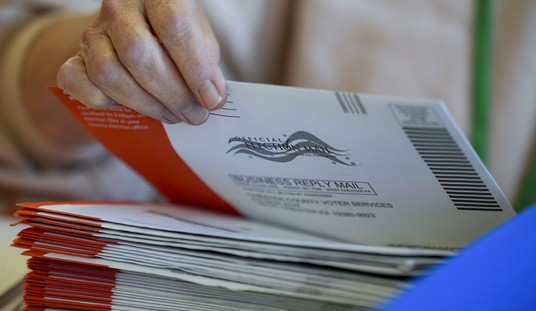
The first salvos in a new race war will be launched this week when the Census Bureau releases its preliminary figures on the 2000 census. I'm not talking about riots in the streets, but a more sophisticated battle waged via computer programs to pack minorities into neat, compact voting blocks. It's all part of the decennial political redistricting required under our Constitution and the 1965 Voting Rights Act. And the combatants in this war include not only various minority groups, who stand to gain political influence, but the Democrat and Republican parties. In an ironic political twist, if state legislatures create more majority black and Hispanic voting districts, which usually vote Democrat, it's still likely fewer Democrats will be elected overall. Here's why: Americans move around frequently, causing dramatic population shifts to occur. So the Constitution requires that every 10 years -- based on the last census -- state legislature redraw the lines for all political jurisdictions to ensure the principle of one person, one vote. But the courts have interpreted the Voting Rights Act of 1965 to require special care be taken not to "dilute" the votes of blacks and Hispanics in the redistricting process. Many civil rights organizations argue that in order to ensure that black or Hispanic votes truly count, minority candidates must be elected. And this can't happen, they argue, unless blacks or Hispanics make up 65 percent of the voters in so-called 'safe' districts. Following the 1970 and 1980 censuses, several states tried to maximize the political clout of black and Hispanic voters by creating these 'safe' districts. The result has been to produce districts configured largely on racial and ethnic lines, which often ignore neighborhood and community ties. But this type of racial gerrymandering also creates unusual political alliances. Civil rights groups that favor racial gerrymandering have lined up with Republicans against Democrats, who favor racial preferences everywhere except in political redistricting. When state legislatures pack in super-majorities of black and Hispanic voters in order to create more 'safe' black and Hispanic districts, they leave surrounding areas with mostly white voters, who are more likely to vote Republican. On balance, the math favors Republicans. If whites, on average, vote about 60-40 Republican, Democrat candidates will have a harder time winning a mostly white district. As Washington Post political reporter Tom Edsall recently explained it, "(Democrats') best strategy is to create as many districts as possible with 25 to 40 percent black voters," leaving fewer mostly black districts. With Republicans in control of both houses in 18 state legislatures, and Democrats in control of both houses in only 16 -- down from 30 a decade ago -- we may see more efforts at racial gerrymandering this year than we did in 1990. We can also expect to see more lawsuits. After the 1990 census, groups and individuals filed more than 130 lawsuits in 40 states challenging the redistricting plans. During the 1990s, the U.S. Supreme Court heard some 10 cases involving race and redistricting. In all of the cases, the Court made clear that race could not be the predominant factor in drawing district lines, striking down some egregiously gerrymandered districts in the process. Nonetheless, state legislatures will no doubt bow to both partisan interests and lobbying by some civil rights groups to create more black and Hispanic districts. And their efforts will put the Bush Administration to one of its first tests on a race-related issue. Under the Voting Rights Act, some political jurisdictions must seek pre-clearance from the Justice Department before they can make any changes affecting voting, including redistricting. The easiest -- and most partisan -- thing for Attorney General John Ashcroft to do in these cases would be to approve redistricting plans based on racially gerrymandered lines. If he does so he'll win praise from civil rights groups and his fellow Republicans. But the right thing for him to do is reject any redistricting plan whose purpose is racially motivated. It's wrong for government to be assigning voters on the basis of their skin color, just as it is wrong for employers to hire or schools to picks students on that basis. On this issue, the Republicans are on the wrong side.
Share:
Vote on It:
Average Vote:
 
About The Author

Linda Chavez is chairman of the Center for Equal Opportunity and author of Betrayal: How Union Bosses Shake Down Their Members and Corrupt American Politics .

Be the first to read Linda Chavez's column. Sign up today and receive Townhall.com delivered each morning to your inbox.

©Creators Syndicate
Sign Up to Post Your CommentsSign Up to Post Your Comments
If you are already registered, click here to login. Otherwise, please take a few seconds to register with Townhall.com. Once you sign up, you’ll be able to post your comments immediately, use the action center, get podcasts, and more!
Note: Fields marked with a red asterisk (*) are required.
Salutation:
First Name:
*
Last Name:
*
Email:
*
Nickname:
*
Note: Nick name will be shown when you post comments.
Address 1:
*
Address 2:
City:
*
State:
*
Zip:
*
Phone:
      
Your daily dose of conservative columns, editorial cartoons, talk radio, news, and more!
(Bi-Weekly) We highlight the best opportunities from our partners for surveys, action items and more.