Townhall.com, Where Your Opinion Counts
Talk Radio:   Bill Bennett   Mike Gallagher   Dennis Prager   Michael Medved   Hugh Hewitt   
BREAKING NEWS  LeftArrow - Townhall.com : Conservative, Political, Republican   RightArrow - Townhall.com : Conservative, Political, Republican  
Columns, funnies & more in your inbox!
Tuesday, August 06, 2002
Marvin Olasky :: Townhall.com Columnist
Remembering one sad day and preventing others
by Marvin Olasky
Vote on It:
Average Vote:
[+] Text [-]
 
 
Poll
Who won Tuesday's presidential debate?


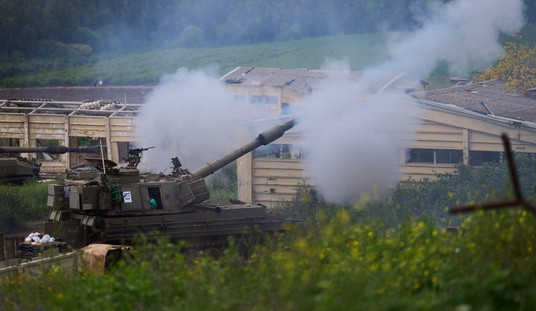
NAGASAKI, JAPAN -- As Israel has learned, it is not easy to strike back at terrorists who put their own children at great risk. When a war-maker hides behind civilians, you often end up either allowing him a haven (and putting your own people in greater jeopardy) or killing the innocent. World War II was a war often fought against civilians, and one of its worst days came here, near the end. On Aug. 9, 1945, according to a plaque at Nagasaki's central point of mourning, a B-29 bomber "flew toward Kokura, an industrial center on the northern coast of Japan's Kyushu Island and the primary target for the world's second atomic bombing. When the airplane reached the sky over Kokura, however, cloud cover prevented visual sighting. After circling three times, it changed course for the second target: Nagasaki." This city almost escaped destruction. As a display in Nagasaki's A-Bomb Museum notes, "At 10:58 a.m., with visibility poor over Nagasaki, the crew considered return to base because of dwindling fuel." But a slight break in the clouds allowed spotting of the Mitsubishi Nagasaki Arms Factory at 11:02 a.m., Japan time, and the B-29 dropped its bomb. Of Nagasaki's population of about 240,000 at the time, about 74,000 died from the blast and another 75,000 were injured. We can see how the path toward war began early in the 20th century, with Japan's forcible annexation of Korea in 1910. Japan went on to invade China, and was pushing to enslave all of Eastern Asia. Tyrants started the war, but civilians initially cheered, particularly after Japan's sneak attack at Pearl Harbor gave it temporary dominance of the Western Pacific. Live by the sword, die by the sword, and all that. We can see that there was reason to drop the second atomic bomb. Japanese leaders, even after the Hiroshima bombing on Aug. 6, still maintained their hope of fighting on. An invasion of Japan would have taken far more lives than the two terrible bombs did. And so we end up with all those deaths, and with schoolchildren chattering their way through the museum, turned suddenly silent when they see pictures of charred corpses of children their own age. The "reasonableness" of terrible action does not negate its sadness. Nor does it eliminate the irony of Nagasaki, the most Westernized city in Japan, being destroyed by Western technology. (As the museum puts it, Nagasaki was "where Japanese students gathered to draw from the well of Western knowledge.") In Nagasaki, Shintoists, Buddhists, Christians and thousands of children without knowledge of any of those faiths all died together. Those who stayed out of politics died alongside those who were heavily involved. No man was an island. World War II was fought by "the greatest generation," but it was also the most terrible war ever in terms of its effects on civilians. We had weapons of mass destruction without precision targeting. Dumb bombs by the thousands killed civilians by the hundred thousands. Today we boast about "smart bombs," which do at times provide the opportunity to punish terrorists and not their children (even though the terrorists do not discriminate in their killing). But there's nothing smart about war, and the lust for authority grabbed, rather than earned, that starts conflicts. Japan during the years after the Hiroshima and Nagasaki bombings put aside thoughts of war and advanced mightily through hard work and international trade. People in Hong Kong, Singapore, South Korea and other determined, education-emphasizing cities and states have prospered despite a lack of great natural resources. If Saudi Arabia and other oil-rich nations used their revenues to help Palestinians gain better lives rather than suicidal deaths, and if Muslim clerics would oppose rather than foster terrorism, Israel and its neighbors could also have peace.
Share:
Vote on It:
Average Vote:
 
About The Author
Marvin Olasky is editor-in-chief of the national news magazine World, provost of The King's College, and a professor of journalism at The University of Texas at Austin. For additional commentary by Marvin Olasky, visit www.worldmag.com.
 
Be the first to read Marvin Olasky's column. Sign up today and receive Townhall.com delivered each morning to your inbox.
Sign Up to Post Your CommentsSign Up to Post Your Comments
If you are already registered, click here to login. Otherwise, please take a few seconds to register with Townhall.com. Once you sign up, you’ll be able to post your comments immediately, use the action center, get podcasts, and more!
Note: Fields marked with a red asterisk (*) are required.
Salutation:
First Name:
*
Last Name:
*
Email:
*
Nickname:
*
Note: Nick name will be shown when you post comments.
Address 1:
*
Address 2:
City:
*
State:
*
Zip:
*
Phone:
      
Your daily dose of conservative columns, editorial cartoons, talk radio, news, and more!
(Bi-Weekly) We highlight the best opportunities from our partners for surveys, action items and more.