Townhall.com, Where Your Opinion Counts
Talk Radio:   Bill Bennett   Mike Gallagher   Dennis Prager   Michael Medved   Hugh Hewitt   
BREAKING NEWS  LeftArrow - Townhall.com : Conservative, Political, Republican   RightArrow - Townhall.com : Conservative, Political, Republican  
Columns, funnies & more in your inbox!
Friday, April 18, 2003
Marvin Olasky :: Townhall.com Columnist
Refining cruelty
by Marvin Olasky
Vote on It:
Average Vote:
[+] Text [-]
 
 
Poll
Who won Tuesday's presidential debate?


"War is cruelty. You cannot refine it." That's what Union Gen. William Tecumseh Sherman told Atlanta officials in 1864. But the U.S. armed forces during the past month routed both Iraq's army and nearly 140 years of military doctrine.

Sherman was a military innovator, consciously going against the tradition of not waging war on civilians. During 1863, his forces in Mississippi pillaged and burned towns. In 1864 in Georgia, he ordered his men to "burn 10 or 12 houses of known secessionists, kill a few at random, and let them know it will be repeated every time a train is fired upon." In 1865, even one of Sherman's majors complained to his wife of "the frightful devastation our army was spreading" in South Carolina: "Women, children and old men turned out into the mud and rain, and their houses and furniture first plundered and then burned."

Sherman's doctrine produced victory in the short run. Had his army not taken Atlanta, a war-weary, disunited Union might well have elected Democratic candidate George McClellan rather than re-electing Abraham Lincoln. McClellan probably would have agreed to negotiations concerning Southern independence. Had Sherman not shown a willingness to wage war on civilians, the surrender of Robert E. Lee might have been followed by years of guerrilla warfare. But Sherman's success came at a price that went beyond individual suffering: for decades afterward, resentment and sometimes hatred of Yankees prevailed in parts of the South.

The American Civil War was a precursor in many ways to the wars of the 20th century. The machine guns that first emerged during the Civil War became central to the trench slaughter of World War I. Not until World War II, though, was the Sherman Doctrine taken to its extreme. Hitler's Germans tried to break British will by bombing the civilian populations of London and other cities. Children were just part of the body count. German troops in other countries replied to snipers by lining up civilians and shooting them.

Then came the counterattack. Allies dropped dumb bombs on German cities, pointing to military targets and factories but bringing huge "collateral damage." Later, American and British forces tried to break the German (and then the Japanese) will by going after civilian populations, as well. Regrettable, they acknowledged, but what was the alternative? "War is cruelty. You cannot refine it."

At the height of the Cold War, the United States planned to respond to a Soviet nuclear attack with "mutual assured destruction": They wipe out our civilian population, we wipe out theirs. It's no surprise that the left bought into this concept, lock, stock and gun barrel, assuming during the Vietnam War years that American involvement in Southeast Asia represented cruelty, and there was no way to refine it.

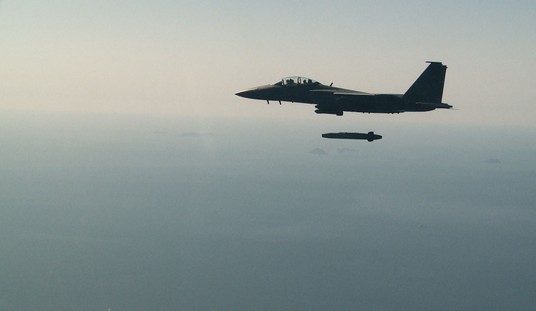
This past month was refinement time, and the place was Iraq. Yes, civilian deaths sadly occurred, but destroyed military targets often sat next to undamaged civilian structures. "Smart bombs" and very smart missiles provided the opportunity for a refined war, yet human decisions were still key, with military planners selecting ordnance and time and direction of delivery to ensure the least possible chance of civilian damage. An emphasis on speed, mobility and flexibility allowed soldiers to go around potential dangers rather than roll over them.

The Sherman Doctrine died during the past month in part because of a political strategy to influence the world's opinion of the war. It died in part because of technological progress. It died in part because we recognized that Iraq's regime, and not most of its people, was to blame. But it also died because, as often as the Bible may be ignored in the United States and the United Kingdom, many American and British leaders had grown up within an ethos powerfully influenced by a biblical understanding of compassion.

"War is cruelty. You cannot refine it." Not so.

Share:
Vote on It:
Average Vote:
 
About The Author
Marvin Olasky is editor-in-chief of the national news magazine World, provost of The King's College, and a professor of journalism at The University of Texas at Austin. For additional commentary by Marvin Olasky, visit www.worldmag.com.
 
Be the first to read Marvin Olasky's column. Sign up today and receive Townhall.com delivered each morning to your inbox.
Sign Up to Post Your CommentsSign Up to Post Your Comments
If you are already registered, click here to login. Otherwise, please take a few seconds to register with Townhall.com. Once you sign up, you’ll be able to post your comments immediately, use the action center, get podcasts, and more!
Note: Fields marked with a red asterisk (*) are required.
Salutation:
First Name:
*
Last Name:
*
Email:
*
Nickname:
*
Note: Nick name will be shown when you post comments.
Address 1:
*
Address 2:
City:
*
State:
*
Zip:
*
Phone:
      
Your daily dose of conservative columns, editorial cartoons, talk radio, news, and more!
(Bi-Weekly) We highlight the best opportunities from our partners for surveys, action items and more.