Townhall.com, Where Your Opinion Counts
Talk Radio:   Bill Bennett   Mike Gallagher   Dennis Prager   Michael Medved   Hugh Hewitt   
BREAKING NEWS  LeftArrow - Townhall.com : Conservative, Political, Republican   RightArrow - Townhall.com : Conservative, Political, Republican  
Columns, funnies & more in your inbox!
Thursday, August 10, 2006
Marvin Olasky :: Townhall.com Columnist
Acts of God -- or acts of reckless man?
by Marvin Olasky
Vote on It:
Average Vote:
[+] Text [-]
 
Poll
Who won Tuesday's presidential debate?


The devastation wrought by Hurricane Katrina last August will be documented once again in anniversary TV specials later this month. But it's still unclear whether the terrible storm cut into the what-me-worry attitude that has led many of us to build homes below sea level, on barrier islands, on hillsides with brush that annually burn, or over earthquake faults -- and then be shocked when catastrophe comes.

These days we think that if we have enough warning, we're immune -- but New Orleans residents knew that a hurricane was coming. Many people over the years have blithely lived next to volcanoes. Mount Krakatoa in Indonesia began erupting in May 1883, three months before its enormous explosion killed 36,000, but undisturbed residents even climbed to the volcano's peak to peer inside. Six years later in Johnstown, Pa., residents had a running joke that "the dam has bust, take to the hills." When it did break, there was little time to run, so 2,500 died.

We talk about many disasters as "acts of God," but some are acts of man. The Yangtze River flood in 1954 killed 40,000 Chinese and left 1 million homeless. Americans had planned to build there the world's largest dam, both to generate power and to control flooding, but China's new communist government used clay soil to build levees that collapsed, submerging an area twice the size of Texas.

"Acts of God" happen, but the number of fatalities soars when short-term goals take precedence over long-term safety. Before Mount Pelee erupted on the Caribbean island of Martinique on May 8, 1902, residents of the nearby city of St. Pierre smelled sulfur fumes for weeks. Compared to Martinique officials, Louisiana's recent leaders look like geniuses. The governor in St. Pierre did not want anything to get in the way of his May 10 reelection, so he set up roadblocks to keep constituents from leaving before they could cast ballots. The local newspaper mocked those who worried. Its editor, along with 40,000 other residents, died during the eruption.

Is a disaster "natural" when people die because of houses built below sea level or along a hurricane-hit shore? Some of our residential patterns make as much sense as the southern European practice during the 18th and 19th centuries of using church vaults to store gunpowder. Churches had steeples or bell towers susceptible to lightning strikes, and a lightning strike, fire and subsequent gunpowder explosion in Brescia, Italy in 1769 killed 3,000 people. A similar lightning strike and explosion on the island of Rhodes in 1856 killed 4,000.

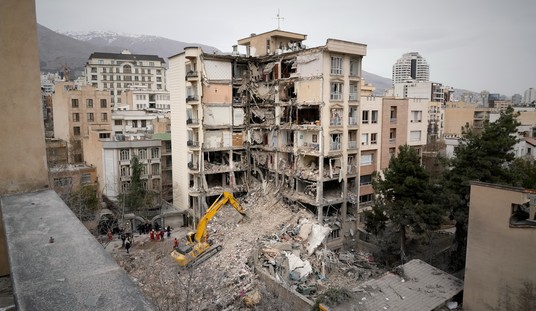
Sometimes we're smarter than that. We do invest in some big, strong buildings that make us think we're safe -- but in the 1988 Armenian earthquake, the 1995 Japanese earthquake and the 1999 Turkish earthquake, new multi-storied buildings (including ones that conformed to California's Uniform Building Code) collapsed. Japan's calamity left 5,500 dead and was, according to a subsequent risk management report, "a terribly striking example of what earthquakes can do to a modern industrialized society."

Unanticipated problems are inevitable, but politics and pride can turn them into disasters. In 1912 some 1,500 died when the "unsinkable" Titanic sunk on its first trans-Atlantic voyage, in part because of a prideful lack of concern about icebergs, and in part because of a technical flaw: the separating walls in its "watertight" compartments did not extend all the way to the top, so that water flowed from one to the next. Two years later, 1,000 voyagers died on the St. Lawrence River when the Empress of Ireland, going too fast amid fog, slammed into a coaling ship.

Those were not acts of God: they were acts of man, and some of what we currently accept -- the University of California, Berkeley football stadium built right over a fault line, for example -- will seem incredibly reckless to future historians.

Share:
Vote on It:
Average Vote:
 
About The Author
Marvin Olasky is editor-in-chief of the national news magazine World, provost of The King's College, and a professor of journalism at The University of Texas at Austin. For additional commentary by Marvin Olasky, visit www.worldmag.com.
 
Be the first to read Marvin Olasky's column. Sign up today and receive Townhall.com delivered each morning to your inbox.
Subject: It's human nature...
...to blame someone else for our mistakes. And in the case of natural disasters, and our own poor judgment, it's easier to blame God than admit our own fault.

I think He still loves us, though, in spite of that.

Acts Of God
You are on target brother. America is under judgement already because of her turning away from The God of Abraham, Issac and Jacob, and His Son who gave His Blood for our souls. America is still the best Country in the World, because we do have a remanant of Believers, where His Holy Spirit still dewells. Once the Rapture occurs, and all the Christains are taken to Heaven, Lord have Mercy on those that have not trusted the Lord as their Savior.

Keep up the good work, maybe some lost soul will read the truth, and turn to Jesus.
Sign Up to Post Your CommentsSign Up to Post Your Comments
If you are already registered, click here to login. Otherwise, please take a few seconds to register with Townhall.com. Once you sign up, you’ll be able to post your comments immediately, use the action center, get podcasts, and more!
Note: Fields marked with a red asterisk (*) are required.
Salutation:
First Name:
*
Last Name:
*
Email:
*
Nickname:
*
Note: Nick name will be shown when you post comments.
Address 1:
*
Address 2:
City:
*
State:
*
Zip:
*
Phone:
      
Your daily dose of conservative columns, editorial cartoons, talk radio, news, and more!
(Bi-Weekly) We highlight the best opportunities from our partners for surveys, action items and more.