Townhall.com, Where Your Opinion Counts
Talk Radio:   Bill Bennett   Mike Gallagher   Dennis Prager   Michael Medved   Hugh Hewitt   
TOP NEWS   LeftArrow - Townhall.com   RightArrow - Townhall.com  
Columns, funnies & more in your inbox!
Saturday, January 05, 2008
A First Cut for the Real Contenders
By Michael Barone
Vote on It:
Average Vote:
[+] Text [-]
 
Poll
Are you struggling to keep up with rising gas prices?


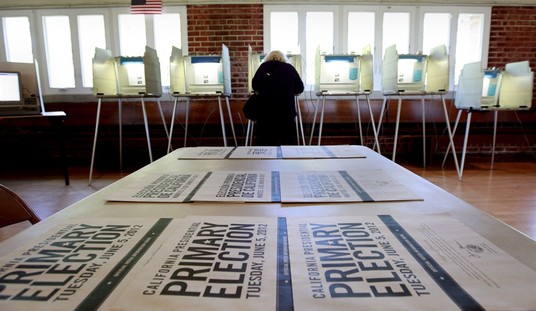
As this is written, the final numbers are not in, but the results of the Iowa precinct caucuses are clear. Two candidates that almost no one in the country had heard of four years ago -- Democratic Sen. Barack Obama and Republican Mike Huckabee -- have emerged victorious. And by mighty impressive margins, particularly so if you factor in turnout.

The Iowa Democratic Party estimated Democratic turnout at 220,000, nearly double the 124,000 recorded in 2004. The Republican turnout appears to have increased from 87,666 in the last contest in 2000 to something like 114,000. That would be impressive, except that it puts Republican turnout at about half the Democratic level, in a state that was split just about evenly between the two parties in the past two presidential elections.

The Des Moines Register was criticized for its poll last week that projected a substantial boost in caucus-goers by self-identified independents. But that poll seems to have been pretty much spot on. Turnout had a big hand in Obama's victory, as he carried young voters by an overwhelming margin and led Sen. Hillary Clinton among all voters under 60. He also seemed to lead among well-educated and upscale voters.

Iowa Democrats' method of scoring the results by "state convention delegate equivalents" understates Obama's popular vote margin. He won big in large counties like Polk (Des Moines) and university counties like Johnson (Iowa City), which are underrepresented at Democratic state conventions.

John Edwards, in contrast, gamed the delegate system ably by concentrating on rural counties, which are overrepresented. He ended just ahead of or in a virtual tie with Clinton in the official count -- though he ran behind in the popular vote. His vote was down sharply in Polk County, which he carried four years ago. Even though Edwards has been stumping hard in Iowa for six years, he appears to have come in slightly behind his showing in 2004, when he ended up a close second to John Kerry.

Edwards will probably shoulder on in New Hampshire, but it has an aversion to Southerners, and he finished a poor fourth last time around. With far less money than Clinton or Obama, his candidacy appears headed to an unhappy end.

So the Democratic race is now most likely a two-candidate contest between Obama, who can bring large numbers of new and young people into the caucus process, and Clinton, who has the vestigial loyalty of the party's historic constituencies but, at least in Iowa, not a whole lot more.

The entrance poll showed Obama beating her among women, 35 percent to 30 percent, and among men, 35 percent to 23 percent. Keep in mind that the turnout, though a record high, amounted to only about 10 percent of registered voters who lean Democratic. Clinton can hope to do better among the larger primary electorates in New Hampshire, South Carolina and other contests. But she's obviously no longer the overwhelming favorite. The contest between them is likely to be resolved by Feb. 5, when over half the nation will have had a chance to vote.

The outlook for Republicans is less clear. Huckabee showed he had the capacity to bring new voters to the polls: In this year's entrance poll, 60 percent of Republican caucus-goers classified themselves as "born-again Christians," as opposed to the 38 percent "religious right" in the 2000 caucuses. But among the 40 percent non-born-agains, Huckabee won only 14 percent of the vote. There are many Christian conservatives voters in some upcoming Republican contests -- though not in New Hampshire. But Huckabee has to expand his appeal to be a real contender.

The onlooker who is the big winner is third-place John McCain. He's been leading or tied with Mitt Romney in recent New Hampshire polls, after Romney was leading there for months. And while Romney has the capacity to self-finance to Feb. 5 and beyond, it's not clear he'll be a real contender if he fails to win in New Hampshire.

Fred Thompson had a disappointing finish in Iowa. Rudy Giuliani didn't play there, but whether he can recover his high standing in polls in Florida and the big Feb. 5 states is not so sure.

All this threatens to set up arduous contests in both parties with, until recently, unknown candidates able to expand their party's constituencies facing well-known warhorses who may find it tricky to win without antagonizing those constituencies. A tough spot for both parties all around.

Share:
Vote on It:
Average Vote:
 
About The Author
Michael Barone is a senior writer with U.S. News & World Report and the principal co-author of The Almanac of American Politics, published by National Journal every two years. He is also author of Our Country: The Shaping of America from Roosevelt to Reagan, The New Americans: How the Melting Pot Can Work Again, the just-released Hard America, Soft America: Competition vs. Coddling and the Competition for the Nation's Future.
 
TOWNHALL DAILY: Be the first to receive Michael Barone's column. Sign up today and receive Townhall.com daily lineup delivered each morning to your inbox.
 
©Creators Syndicate
Subject: Employer Tipping Point

Good-Bye Employer HealthCare Coverage
“Yes, the first governor (Romney MA) to install universal healthcare” (Mark)

It’s called Universal Coverage. Everyone is required to have healthcare insurance just like auto insurance. The EMPLOYER is the backbone (80%) of this “universal” system. It is NOT one payer/universal such as what Obama/Hillary/Edwards spew. It safeguards YOUR CURRENT EMPLOYER SPONSORED HEALTHCARE COVERAGE and gives an incentive to YOUR employer to keep offering/supplying YOUR healthcare coverage.

You get one of these socialist candidates (Obama/Hillary/Huck) who can actually get close to getting you “universal/one payer” coverage like the “congress has” you can kiss your employer sponsored healthcare coverage GOOD-BYE…YOUR employer will terminate YOUR employer healthcare coverage. There is NO federal law requiring ANY employer to supply you with healthcare coverage…

“universal/one payer”; your taxes will sky rocket, your health care will go down and good luck trying to get a doctor’s appointment. What would it be like at ANY Dr’s office? Try your local DMV office and take a number.

Canada? Don’t make me laugh. They run down here for their healthcare needs. Canada has a population of what? 30 Million? What is the USA? 300 Million? Canada can NOT get it done and WE would go broke trying.

USA government provides healthcare when you reach social security age. Then there is Medicare/Medicaid. WE CAN’T EVEN AFFORD THAT NOW! HOW COULD WE POSSIBLY GIVE IT TO EVERYONE?.....Pie In The Sky.

Get real….Support an ex-Governor, successful businessman, and family man with integrity who CAN BEAT OBAMA AND/OR HILLARY. That man is Willard Mitt Romney………
Sign Up to Post Your CommentsSign Up to Post Your Comments
If you are already registered, click here to login. Otherwise, please take a few seconds to register with Townhall.com. Once you sign up, you’ll be able to post your comments immediately, use the action center, get podcasts, and more!
Note: Fields marked with a red asterisk (*) are required.
Salutation:
First Name:
*
Last Name:
*
Email:
*
Nickname:
*
Note: Nick name will be shown when you post comments.
Address 1:
*
Address 2:
City:
*
State:
*
Zip:
*
Phone:
      
Your daily dose of conservative columns, editorial cartoons, talk radio, news, and more!
(Bi-Weekly) We highlight the best opportunities from our partners for surveys, action items and more.