








Townhall.com, Where Your Opinion Counts
Talk Radio:   Bill Bennett   Mike Gallagher   Dennis Prager   Michael Medved   Hugh Hewitt   
TOP NEWS   LeftArrow - Townhall.com   RightArrow - Townhall.com  
Columns, funnies & more in your inbox!
Wednesday, November 29, 2006
Coping with middle class nightmares: The conservative imperative
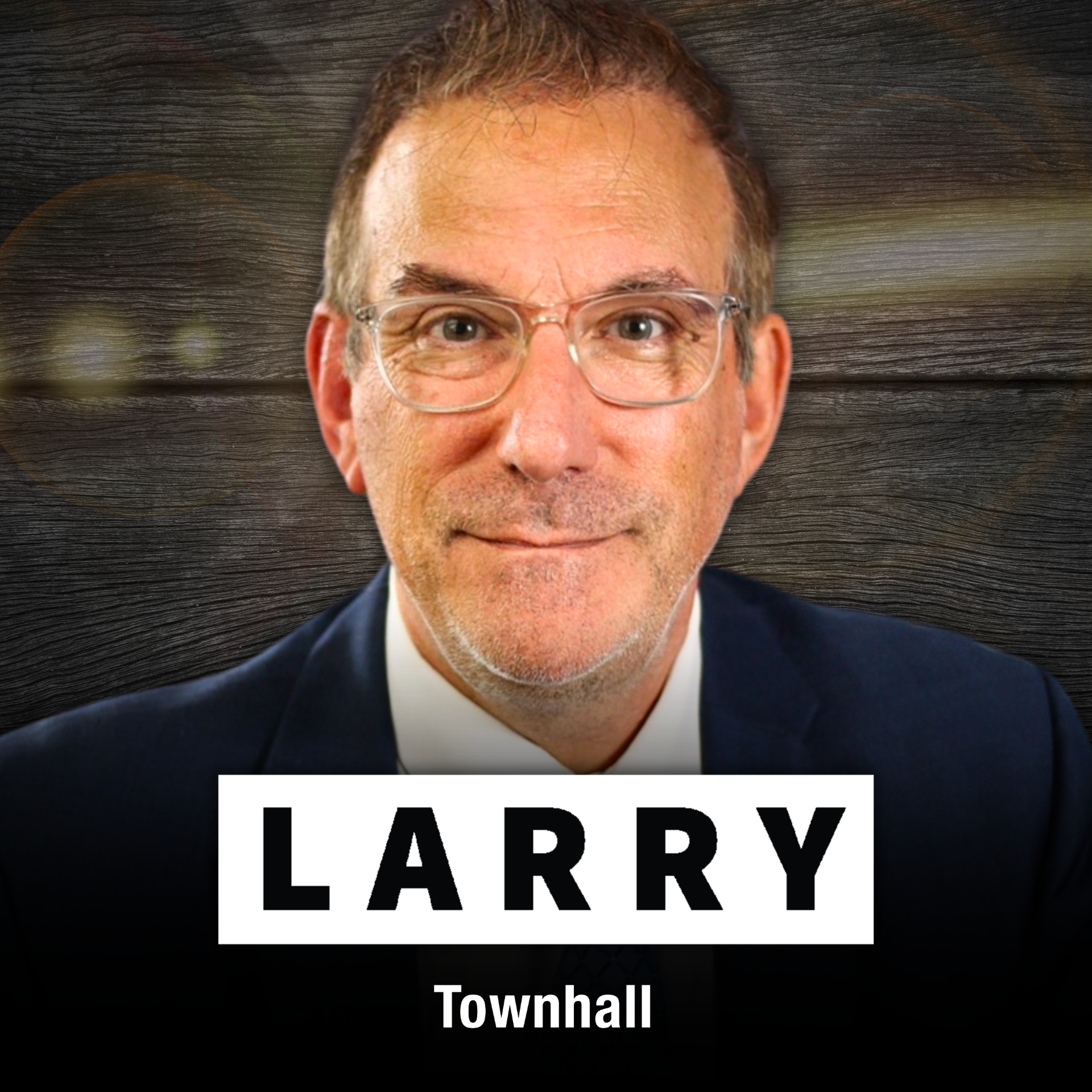
By Michael Medved
Vote on It:
Average Vote:
[+] Text [-]
 
Poll
Do you personally know a young voter who has been sucked into Obamamania?


Over the weekend I awoke from a vivid nightmare that provided a fresh perspective on our national epidemic of middle class anxiety.

In my stupid dream, I engaged in a big-stakes game of rock-paper-scissors with some smug high-rollers and eventually lost everything --- wiping out every one of my bank accounts, erasing all my investments, destroying the totality of my retirement savings, and even giving up my home. I got up from the bed drenched in sweat, literally shivering with dread at the prospect of breaking the news to my wife. After 22 years of marriage, how could I tell my life’s partner that due to my inexplicable foolishness we had been completely ruined?

As nightmares go, this early-morning terror couldn’t count as particularly realistic. I’ve never taken a special interest in playing rock-paper-scissors-- though I had been fascinated by a recent news stories about a much-heralded “world championship” for the dumb but addictive hand game. I’ve also sworn off gambling for more than twenty years—ever since I lost a painful total of $800 playing an elaborately devised, “can’t miss” blackjack system during a trip to Vegas for a lecture.

But even if I didn’t need to fear the specific threat of squandering my family’s resources on a reckless game, the fearful, dreamy experience of sudden collapse, of instantaneous destruction, felt both real and relevant. In fact, the great majority of Americans worry on either a conscious or unconscious level about the possibility that some unforeseeable factor ruthlessly will obliterate the fruit of long years, even decades, of hard and dedicated work. Even people who have painstakingly saved their money, building up equity in their homes or establishing reassuring numbers in their investment portfolios, know that the sudden loss of a job, or a medical disaster, or a law suit or divorce, or a catastrophic investment –not to mention a hurricane, earthquake or flood – could shatter their carefully constructed personal security.

In this peerlessly prosperous country, it takes an annual income of more than $940,000 to qualify for the top 1% of all earners and it’s possible that folks who make that much, and who have many millions salted away, may feel relatively safe from unexpected reverses. For the other 99% of us, however, the sense of middle class vulnerability remains inescapable and acute.

That’s why all the impressive statistics about our constantly rising standard of living mean so little to most people. So what if we own bigger houses, drive cars, operate more and niftier gadgets, eat dinner out with vastly higher frequency and, in hugely increased numbers, send our kids to college? On one level, we can’t deny that we enjoy greater privileges and wider opportunities than any prior generation, but these gifts feel unsatisfying when they can so easily disappear. When demagogues and opportunists whine about “The War on the Middle Class” they seem vaguely credible not because of the hardships that characterize our mostly fortunate lives but because of the sense insecurity that sours our blessings. What good is a great house with a beautiful view and rising equity if you lose your job and the bank forecloses?

Middle class insecurity is such an obvious, overwhelming factor for so many tens of millions of Americans that one can only marvel that both of our major political parties have done so little to address or temper it. Democrats continue to focus on issues like raising the minimum wage—which might help some of the lowest paid workers enter the middle class, but will do nothing to reduce the vulnerability of more fortunate Americans (including those small businessmen who will suffer from such a raise). The Republicans continue to concentrate on blocking tax hikes and new regulations – policies that will help individuals and businesses accumulate wealth but don’t serve to protect that wealth from sudden reversals of the medical, legal, employment, or natural disaster varieties.

Despite their different policies and preferences, both parties emphasize protecting the ability of ordinary Americans to get ahead and improve their status while an emerging majority is apparently less concerned with gaining more than they are with defending what they’ve already built. In fact, most people understand the idea (on a visceral level at least) that heightened security comes with a cost – and that’s a cost they seem more and more willing to pay.

Consider the recent debate over Social Security. The benefits remain modest and the costs are shockingly high, but most Americans appear willing to sacrifice real money and real opportunities to avoid any lingering fears that they will be destitute in old age. The typical American household with two wage-earners now spends more than $5,000 a year on Social Security (if you count the so-called “Employer’s Contribution” which constitutes that much extra pay that could go to the worker). With even a minimal rate of return from, say, a typical CD, this payment would amount to more than $60,000 in ten years, or more than $270,000 in a typical working lifetime. This sort of nest-egg could generate a substantial annuity for every retiring worker – equaling current Social Security payments, while still providing hundreds of thousands of dollars to pass on to heirs.

Why can’t everyday citizens do the math and see that they would come out way ahead saving on their own rather than encouraging government to raid their weekly paychecks for the meager pay-offs of Social Security? Why did the public response prove so harsh and vitriolic when President Bush suggested using even small amounts of the government grab to create personal retirement accounts? In part, people cling desperately to Social Security because they trust the government more than they trust the vagaries of markets, or trust themselves to make regular or wise contributions for their own welfare. For a clear majority of Americans, they prefer trading the ability to get ahead now for the promise of security in the future.

The same calculation drives the rising clamor for “universal health care” --- the breathtakingly expensive (and hugely appealing) idea that government will take care of paying all medical bills for everybody. The push for this new entitlement isn’t based on the notion that Uncle Sam must pay for your regular check-ups, or the routine procedures that even healthy people require. Tens of millions of Americans – especially those below middle age – don’t bother to pay for health insurance because they don’t expect to get sick, and they’d rather pay for the minor medical expenses that they require rather than buying costly insurance to protect against disasters they hope to avoid. As time goes on, however, even the young and indestructible begin to age and to dread the greater risk of ill health. In this context, a lack of insurance – or of adequate insurance – greatly intensifies the sense of exposure. A government program like Medicare, extended to citizens of every age, begins to sound like a good idea, in forcing everyone to get the coverage they might otherwise try to skip.

Many other issues similarly play to the widespread Middle Class anxiety concerning the protection of past gains – thereby reflecting not the long-standing suffering and misfortunes of typical households, but their recent successes in enhancing their status, and the plausible fear that these hard-won advances will quickly be reversed. This fear obviously stands behind the lingering desire on the part of many working Americans for decisive government action against the perceived evils of “globalization” and free trade. Abundant economic evidence proves that the relatively unfettered flow of goods and services creates far more jobs than it costs—by a ratio of at least two to one – and the current unemployment rate (an historically low 4.4%) hardly confirms all the dire predictions that NAFTA, or GATT or the WTO would throw tens of millions of our loyal citizens out of work. Nevertheless, the undeniable, society-wide benefits of free trade offer cold comfort to any of those individuals who have lost jobs, or who live in fear that their work will be “shipped overseas” to low-wage competitors in China or India.

All attempts to dismiss or minimize such concerns sound elitist, out-of-touch, patronizing and off-putting. If a caller to my radio show speaks for many of his fellow citizens and expresses the fear that his job will fall victim to globalization, it’s not appropriate to respond by citing our booming economy and the likelihood that he’ll find another job, eventually.

The first, most important step in dealing with the national tidal wave of Middle Class anxiety is to take it seriously, to acknowledge its logical basis and to shape a responsible reform agenda to deal with its sources. Those plans must begin, however, with the acknowledgement of three uncomfortable but incontrovertible facts about some of the most popular of the proposed governmental initiatives meant to provide more security for the middle class ---

1) Many, it not most, governmental “security” programs simply don’t work

2) Even the security programs that do work come with a steep, sometimes punishing economic cost, and

3) Any effort to assure economic security inevitably involves a loss of freedom. Continued...

1 2
| Full Article & Comments | Next >
Share:
Vote on It:
Average Vote:
 
About The Author

Michael Medved, nationally syndicated talk radio host, is author of 10 non-fiction books, including The Shadow Presidents and Right Turns.

Be the first to read Michael Medved's column. Sign up today and receive Townhall.com delivered each morning to your inbox.

Subject: einhverfr
I think your proposals are good in comparison to what's in place now, but they are too limited considering the current system's shortcomings. There really isn't a right to health care in this country as you said... there is a right to emergency room care, which is somewhat different and less than what people need. We need a full medical solution, perhaps like you would find in northern Europe.

You are right that hospitals do take a beating on bankruptcy patients and the indigent, but hospitals and the property groups that own hospital grounds are hugely profitable due to the lack of restrictions and price ceilings on those of us lucky enough to have insurance.

Also, the current system of HMO's restricts the ability of doctors to profit while doing nothing to hold down the profits of the shareholders for the HMO. There is a general lack of margin discipline in the insurance industry which works to the great advantage of the insurers and to the detriment of employers, the insured and the uninsured. Again, the for profit structure is the "evildoer" here.

Some vastly different models other than those currently in use need to be tried, and the most effective ones implemented. Market based approaches are failing. Since insurance companies and hospitals at advantage under the current system can't be trusted to change that system to the detriment of their shareholders, I would trust the government for this task. The govt, at least, is accountable to the electorate. By contrast, most corporate leadership isn't even accountable to the shareholders.


mocheese
Having watched the recent issues with Medicare and Medicaid, I am quite opposed to socialized health care. In the abstract it really seems like a good idea, but I just don't trust the governemnt to be fair about it. In fact since the Reagan years, both parties have sought to use the system against doctors. Why should we trust these people with our health care?

Under Reagan (Republican, in case you don't remember), a bounty system was set up for fraud prosections so that many minor clerical errors (often which didn't cost the taxpayer money) were prosecuted. Most doctors would settle out of court.

Under Gov Locke in Washington (Democrat), a statistical system was set up so that doctors would be prosecuted for fraud if they deviated from the normal charge profile. No further evidence needed.

Socialized medicine is a recipie to drive our doctors out of business and ensure that nobody wants to become a doctor. The quality of medicine would suffer greatly, I'm afriad.

If you read my proposals above, my goal is to reduce the medical costs that have to be absorbed by hospitals through the bankrupcy system. Also we need to stop subsidizing cheap drugs sold elsewhere like Canada.
Sign Up to Post Your CommentsSign Up to Post Your Comments
If you are already registered, click here to login. Otherwise, please take a few seconds to register with Townhall.com. Once you sign up, you’ll be able to post your comments immediately, use the action center, get podcasts, and more!
Note: Fields marked with a red asterisk (*) are required.
Salutation:
First Name:
*
Last Name:
*
Email:
*
Nickname:
*
Note: Nick name will be shown when you post comments.
Address 1:
*
Address 2:
City:
*
State:
*
Zip:
*
Phone:
      
Your daily dose of conservative columns, editorial cartoons, talk radio, news, and more!
(Bi-Weekly) We highlight the best opportunities from our partners for surveys, action items and more.