| ATLANTA -- "There is no substitute for the unique legitimacy
provided by the United Nations," Secretary-General Kofi Annan falsely
declared this week in a deluded diatribe to the U.N. General Assembly.
Annan's speech was a desperate attempt to regain the relevancy
that he lost since Bill Clinton, who took his marching orders from the U.N.,
left office. Kofi Annan and his foreign policy machinations enjoyed the
attention of the world press at a time in history when the Oval Office
occupant was otherwise distracted by interns and depositions. But that era
is long gone, as President George W. Bush amply demonstrated this week.
So let me offer a few alternatives to the "Kofi Doctrine," which
states that U.N. "legitimacy" has "no substitute."
First: the U.S. Constitution, which entrusts the Congress -- not
Annan's Security Council -- with the authority to commit American troops to
war to defend U.S. interests. Second: the American military, which enforces
U.N. resolutions and compels dictators like Saddam Hussein to comply with
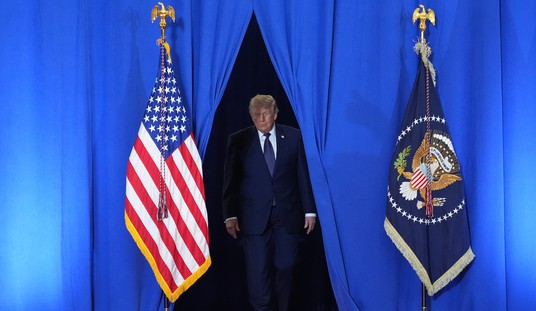
them. Third: President George W. Bush. There is only one word that can
describe the president's actions this week -- leadership.
Bush had long ago made up his mind that the curtain must come
down on Saddam Hussein's reign of terror in Iraq. His flouting of weapons
inspectors, accumulation of weapons of mass destruction, and desire to
harbor and defend terrorists are too great a risk, and the U.N. had allowed
these "dangers to gather" for too long. It was time to act.
Bush's decisive leadership stood in stark contrast to Kofi
Annan, who boasts that he has "used his good offices in several delicate
political situations," including "an attempt in 1998 to gain Iraq's
compliance with Security Council resolutions." But what has Annan's
"delicacy" toward Saddam accomplished? Since 1990, the U.N. Security Council
has passed no fewer than 23 resolutions condemning Iraq's military
aggression, development of chemical and biological weapons, and refusal to
permit inspections, all of which Saddam ignored.
Bush concluded that if pious exhortations and Security Council
resolutions were effective, there would be no need for the United States to
return to Iraq. The critics, however, were plentiful. Only Britain's Tony
Blair stood at the president's side at Camp David, while his European
brethren squawked from afar.
"I am totally against unilateralism in the modern world,"
sniffed French president Jacques Chirac. Across the Rhine, chancellor
Gerhard Schroeder warned that Germany will not "click its heels" and follow
the United States into an "adventure" in Iraq. Vladimir Putin, chiming in
from Moscow, expressed "serious doubts" about U.S. military action, and
Nelson Mandela offered that the United States should not "be allowed to take
the law into their own hands." Archbishop Jean-Louis Tauran from the Vatican
advised the United States to recognize that "the law of the jungle" cannot
be imposed in Iraq.
Back in Washington, as one might expect, congressional Democrats
were watching Kofi Annan's back. Before holding Iraq accountable, "I would
hope (Bush) would get a Security Council vote of approval," said Senate
Majority Leader Tom Daschle. Senate Foreign Relations Committee chairman Joe
Biden warned Bush to watch what he said because the "very legitimacy of (the
United Nations) is at stake." Bill Clinton warned Bush that the time is not
right to confront Saddam, even though "there is no question he has
significant stocks of chemical and biological agents ... (and) he'll do
everything he can to use them." Instead, Clinton suggested, President Bush's
foreign policy goal should be to "turn the world into a global community."
But by week's end, the tide began to turn. Sen. John McCain
pressured Daschle to schedule a vote in support of the president before
Congress recesses next month. Senate Minority Leader Trent Lott warned that
"we should not wait for the United Nations to act." Former Democrat Sen. Bob
Kerrey wrote in The Wall Street Journal that the case for "a military effort
designed to replace (Saddam) 'is overwhelming.'"
American allies were also voicing their support. "Sometimes in
order to maintain peace, armed action is necessary," said Italian Prime
Minister Silvio Berlusconi. Jan Petersen, the foreign minister of Norway,
said Bush's speech "challenged us to (live) up to our responsibilities." The
foreign minster of Romania bluntly stated, "We support the United States."
Portuguese Foreign Minister Antonio Martins da Cruz chastised his European
friends, saying, "We believe it is a mistake what some allies are doing --
blaming the United States. We need to blame Iraq." Denmark's representative
said the United States doesn't need to wait for another U.N. resolution
before confronting Saddam, and Spain and France were showing signs of
support, as well.
Even Kofi Annan, in his speech to the General Assembly, signaled
his desire not to be left out in the cold. International security, Kofi
stated, depends on the Security Council's "political will to act ... even
when agreement seems elusive at the outset."
The president does not need the permission of the U.N. to defend
the United States of America and rid the world of a terrorist dictator. It
is a concept that Bill Clinton never understood and which Kofi Annan,
despite his objections, is beginning to grasp. This week, George W. Bush
showed that there is a substitute to the Kofi Doctrine -- it is called
American leadership. And when true and legitimate leadership is offered to a
noble cause, the world will embrace it, as they are already beginning to
show.
|