
























There long has been a legal, almost philosophical, question hanging over the
Second Amendment. While it protects the right to keep and bear arms, is that

an individual right or may it be exercised only in connection with the
state's need to maintain a militia?
The exact wording of this much-disputed amendment has been the subject of
many an historical and even grammatical debate. To quote the sacred text
itself: "A well-regulated Militia, being necessary to the security of a free
State, the right of the people to keep and bear Arms, shall not be
infringed."
Is that introductory clause only an explanation of why citizens have a right
to bear arms, a kind of rhetorical fillip, or is it a restriction on that
right?
That kind of question makes good grist for legal seminars and after-dinner
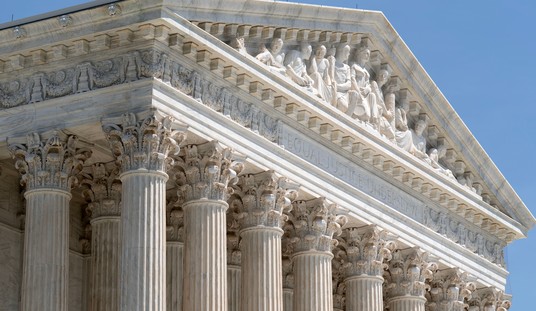
conversations, but now - Uh oh! - the Supreme Court of the United States has
decided to rule on it by agreeing to review a decision out of Washington,
D.C.
That decision found that the capital city's sweeping gun-control ordinance
violates the Second Amendment by making it illegal for ordinary citizens to
own a handgun. (Even privately owned rifles and shotguns must be kept
"unloaded, disassembled or bound by a trigger lock.")
The result has been just what you might think - the law-abiding are legally
deprived of handguns while the lawless show as much respect for this law as
they do others.
To quote Cathy Lanier, Washington's acting chief of police: "Last year, more
than 2,600 illegal firearms were recovered in D.C., a 13 percent increase
over 2005." The bad guys seem to have no trouble finding a weapon in the
nation's capital, while the innocent are legally disarmed.
The numbers tell the tale: In the five years before this anti-gun ordinance
was adopted in 1976, the murder rate in D.C. was dropping: from 37 for every
100,000 residents to 27. Five years later, the murder rate was back up to 35
per 100,000.
Over the course of the 30 years that this ordinance has been in effect, the
annual murder rate has fallen below its 1976 level only once. No one can
seriously contend that this law has cut down on crime. Quite the contrary.
"This comports with my own personal experience," writes Mike Cox, who is now
attorney general of Michigan. "In almost 14 years as prosecutor and as head
of the Wayne County (Detroit) Prosecutor's Office, I never saw anyone
charged with murder who had a license to legally carry a concealed weapon.
"Most people who want to possess guns are law-abiding and present no threat
to others. Rather than the availability of weapons, my experience is that
gun violence is driven by culture, police presence (or lack of same), and
failures in the supervision of parolees and probationers."
Washington's largely futile ban on handguns also has run afoul of
constitutional scholars who see an individual right to keep and bear arms in
the Second Amendment, not just a collective right to maintain a militia.
Now, with the Supreme Court's having agreed to review this case, some see a
chance to clear up - once and for all - any doubt about the Second
Amendment's reach, and establish beyond cavil the individual's right to bear
arms in this Republic.
But beware of courts when they decide to hand down a definitive decision
about a long-debated principle of constitutional law. That's what happened
in 1857 when Chief Justice Roger Taney decided that the Supreme Court over
which he presided was going to clear up the cloudy legal issues hanging over
the South's peculiar institution.
Continued... |