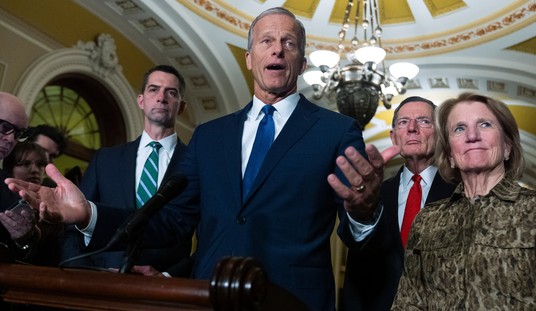
Senate Majority Leader Harry M. Reid (D-NV) pulled down the
Warner-Lieberman Global Warming Bill as Republicans filibustered and
there were too few Democrats voting for cloture to require an up-or-down
vote. Immediately after the bill went off the Senate Calendar, Senator
John F. Kerry (D-MA) told the Washington press corps that this defeat
didn't mean anything because the bill will pass by a substantial margin
in the next Congress. Democrats believe they will win a minimum of eight
Senate seats, perhaps as many as eleven seats.
However, there are nearly five months before the general election and
things can change between now and then. If Republicans lost only four
seats they yet would have sufficient votes to maintain a filibuster. The
Public Opinion and Policy Center of the National Center for Public
Policy Research has conducted an extensive poll which shows that 65% of
the American public is against spending even one penny more to fight
global warming. The number of people who reject increasing gas prices
to fight global warming has increased by 17% in only two months. The
National Center conducted a similar survey in February. An additional
13% beyond the 65% reject spending 5% more to fight greenhouse gas
emissions.
Duke University's Nicholas Institute for Environmental Solutions reports
that the Warner Lieberman legislation if enacted would increase
petroleum prices by 5.9% by 2015. There are other studies which suggest
that prices would be raised even higher.
The survey indicates that 71% of the American people reject higher
spending for electricity while an additional 16% object to paying more
than 12% for electricity. The American Council for Capital Formation and
the National Association of Manufacturers have a study which contends
that Warner-Lieberman would raise electricity costs between 13% and 14%.
When taken together 90% of Americans oppose Warner-Lieberman's costs for
both gasoline and electricity. David A. Ridenour, Vice President of the
Center, says that while 90% opposition is unbelievably high, that number
may be higher because the bill would considerably increase the price of
food and consumer goods. That, in turn, would cause a loss of domestic
jobs. Warner-Lieberman includes what is called a cap-and-trade
provision. The bill would impose strict caps upon emissions from power
plants, manufacturing plants, fuel refiners and producers and chemical
manufacturers. Then an emissions trading system would be established
which would allow companies which omit fewer greenhouse gasses to sell
the excess portion to companies which exceed the caps.
The poll was conducted by Wilson Research Strategies. 802 people who are
likely to vote in 2008 were surveyed. It includes 37% registered
Democrats, 30% independents and 29% Republicans. Interestingly,
opposition to this measure was higher among Blacks and Hispanics.
If Senator Kerry accurately predicts swift passage of the bill in the
next Congress we could be facing $5 a gallon for gasoline and $7 for
diesel fuel. It is impossible to predict the mood of the electorate at
that point. It could be that the public will weigh in on this
legislation big time. I recall one time that then Majority Leader Howard
H. Baker (R-TN) predicted an overwhelming cloture vote on a crime bill
and swift passage thereafter. The next day the vote was 15 votes short
of cloture. He never saw it coming. We might see a similar situation
respecting global warming legislation.
|