Townhall.com, Where Your Opinion Counts
Talk Radio:   Bill Bennett   Mike Gallagher   Dennis Prager   Michael Medved   Hugh Hewitt   
BREAKING NEWS  LeftArrow - Townhall.com   RightArrow - Townhall.com  
Columns, funnies & more in your inbox!
Wednesday, May 23, 2001
Walter E. Williams :: Townhall.com Columnist
Orchestrating Energy Disastere
by Walter E. Williams
Vote on It:
Average Vote:
[+] Text [-]
 
 
Poll
Who won Tuesday's presidential debate?


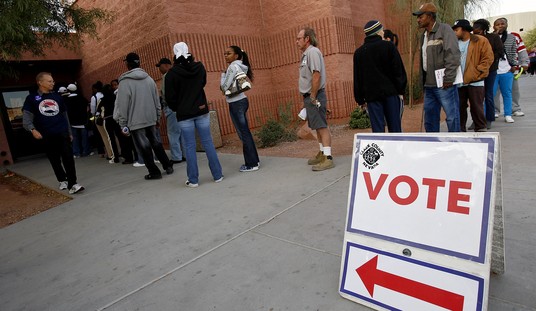
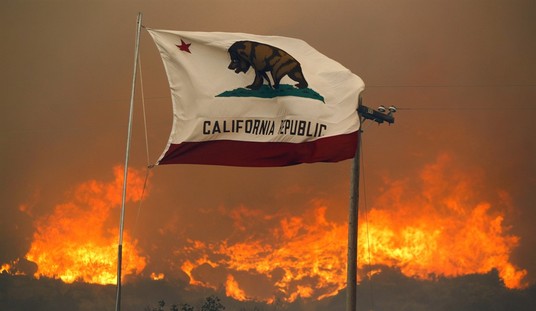
One needn't be a rocket scientist to create California's energy problems. According to the California Energy Commission, from 1996 to 1999 electricity demand, stimulated by a booming economy, grew by 12 percent while supply grew by less than 2 percent. Here's how California created its supply crunch. It takes two years to build a power plant in business-friendly states but four years in California. Sunlaw Energy Company wants to build a $256 million natural-gas-fired plant in Los Angeles; community activists are stopping it. San Francisco activists killed a proposal to float an electricity-producing barge in the bay, even as the city faced blackouts. Computer software giant Cisco Systems has led the charge against a proposed Silicon Valley power plant. California currently has two nuclear plants, Diablo Canyon and San Onofree, that could solve its supply problems, but California has constitutionally banned nuclear power and is decommissioning its nuclear plants. Drs. Michael Lynch and Adrian Moore point to other California methods that stifle energy production in "Power Tripped" appearing in the June issue of Reason, and similar research material is online at rppi.org and reason.com. Bankrupting California electric utility companies could have been figured out by a 4-year-old. First, in the name of deregulation, incentives were created for utility companies to stop generating their own power. California utilities companies were producing 72 percent of their power, now it's 20 percent. The state mandated that Pacific Gas and Electric (PG&E) in the North and Southern California Edison in the South charge electricity customers 12.5 cents per kilowatt hour, which the utility companies had to purchase on "spot" markets for as much as 75 cents per kilowatt hour. One of the supreme tragedies of California's calamity is that it is being sold as a failure of deregulation and capitalism. "Capitalism is falling apart," whined L.A. Times columnist Robert Scheer in late December. MIT economist and New York Times columnist Paul Krugman blames placing "blind faith in markets" for California's crisis. Lynch and Moore point out that California's scheme may be many things, but it's surely not deregulation. For example, the Airline Deregulation Act of 1978 deregulated airlines. In so doing, the Civil Aviation Board was eliminated, along with many of its regulations. The Motor Carrier Act of 1980 deregulated the trucking industry and dramatically cut back the Interstate Commerce Commission and its role controlling interstate trucking. Compare these actions to California's "deregulation," where the state Public Utilities Commission grew in its authority. It added two new state agencies: the Power Exchange, to control all transactions between utilities and electricity generators, and the California Independent System Operator, to take control over the state's transmission grid. California's restructuring law lifted some laws on electricity generation, but it imposed many more on the decisions and operations of utility companies. It's forgivable that a L.A. Times columnist is ignorant about what is and what is not market deregulation, but for economist Paul Krugman to make the same mistake is unthinkable, worthy of turning in his Ph.D. California's experience points to one chief benefit of our federalist system of government. Federalism is where individual states surrender only partial sovereignty but retain all rights and prerogatives not specifically assigned the federal government by the Constitution of the United States -- the idea behind the our Tenth Amendment. Therefore, individual states are free to engage in stupid policy and other states are free to observe the outcome and learn from it. Imagine if there were a federally mandated nationwide electricity "deregulation" scheme like California's -- the entire nation would be in a mess. Keep this federalism benefit in mind when you hear know-it-alls demanding nationwide uniform voting procedures in the wake of last year's Florida debacle.
Share:
Vote on It:
Average Vote:
 
About The Author
Dr. Williams serves on the faculty of George Mason University as John M. Olin Distinguished Professor of Economics and is the author of More Liberty Means Less Government: Our Founders Knew This Well.
 
TOWNHALL DAILY: Be the first to read Walter Williams' column. Sign up today and receive Townhall.com daily lineup delivered each morning to your inbox.
Sign Up to Post Your CommentsSign Up to Post Your Comments
If you are already registered, click here to login. Otherwise, please take a few seconds to register with Townhall.com. Once you sign up, you’ll be able to post your comments immediately, use the action center, get podcasts, and more!
Note: Fields marked with a red asterisk (*) are required.
Salutation:
First Name:
*
Last Name:
*
Email:
*
Nickname:
*
Note: Nick name will be shown when you post comments.
Address 1:
*
Address 2:
City:
*
State:
*
Zip:
*
Phone:
      
Your daily dose of conservative columns, editorial cartoons, talk radio, news, and more!
(Bi-Weekly) We highlight the best opportunities from our partners for surveys, action items and more.