




















Townhall.com, Where Your Opinion Counts
Talk Radio:   Bill Bennett   Mike Gallagher   Dennis Prager   Michael Medved   Hugh Hewitt   
TOP NEWS      
Columns, funnies & more in your inbox!
Wednesday, January 30, 2008
Stimulus Package Nonsense
By Walter E. Williams
Vote on It:
Average Vote:
[+] Text [-]
 
Poll
Will Hillary Clinton fight for the nomination past June 1st?


Some Democratic and Republican presidential hopefuls are preaching economic doom and gloom, disappearing middle class, and failing health care industry. What's their solution? The short answer is give them more control over our lives. Baltimore's political satirist, the late H.L. Mencken, explained this strategy, saying, "The whole aim of practical politics is to keep the populace alarmed, and hence clamorous to be led to safety, by menacing it with an endless series of hobgoblins, all of them imaginary."

The imaginary hobgoblin this time is the threat of an oncoming recession, even though it is by no means clear that the U.S. economy is in a recession. To head off a recession, politicians, including President Bush, are calling for a stimulus package.

Before we talk about stimulus packages, let's get one question out of the way: Is there any evidence for the existence of a Santa Claus or Tooth Fairy? Most grown-ups would probably answer no and ask, "Williams, this is a serious issue. Why are you talking about silly things like Santas and Tooth Fairies?" The reason is quite simple. Let's look at it.

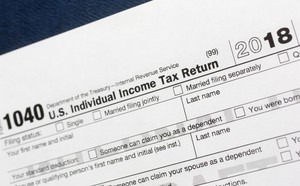
The White House proposal is to give individuals and households tax rebates ranging from $800 to $1,600 respectively. Congressional Democrats, in addition to tax rebates, want a stimulus package that targets the poor through increases in food stamps and greater unemployment benefits. The details of different stimulus packages aren't as important as where the money is coming from. You can bet the rent money it won't come from Santa or the Tooth Fairy.

There are three ways government can get the money for a stimulus package. It can tax, borrow or inflate the currency by printing money. If government taxes to hand out money, one person is stimulated at the expense of another who pays the tax, who is unstimulated and has less money to spend. If government borrows the money, it's the same story. This time the unstimulated person is the lender who has less money to spend. If government prints money, creditors, and then everyone else, are unstimulated. As my colleague Russell Roberts said in a NPR broadcast, "It's like taking a bucket of water from the deep end of a pool and dumping it into the shallow end. Funny thing -- the water in the shallow end doesn't get any deeper."

If we are headed into a recession, these proposed stimulus packages will make little difference. Previous experiences have shown that (1) it takes a long time to enact tax law, making it too late to prevent a recession, and (2) many people save a large portion of any tax rebate. A far more important measure that Congress can take towards a healthy economy is to insure that the 2003 tax cuts don't expire in 2010 as scheduled. If not, there are 15 separate taxes scheduled to rise in 2010, costing Americans $200 billion a year in increased taxes. Adding to the economic effects of that tax increase are the disincentive effects of the measures that Americans will take between now and then in anticipation of those tax increases. According to economists Tracy Foertsch and Ralph Rector, making the 2003 tax cuts permanent will annually add $76 billion to the GDP, create 709,000 jobs and add $200 billion to personal income.

The call for stimulus packages represents the triumph of political arrogance over common sense. The U.S. is a massive $14 trillion economy. The size of proposed stimulus packages range from $150 to $200 billion, which is about 1 to 2 percent of our GDP. Economy-wide, that's a drop in the bucket likely to have little or no effect. Congress ought to focus on measures that create greater long-term productive incentives such as reducing corporate taxes, estate taxes and personal income taxes as well as economic deregulation.

Share:
Vote on It:
Average Vote:
 
About The Author
Dr. Williams serves on the faculty of George Mason University as John M. Olin Distinguished Professor of Economics and is the author of More Liberty Means Less Government: Our Founders Knew This Well.
 
TOWNHALL DAILY: Be the first to read Walter Williams' column. Sign up today and receive Townhall.com daily lineup delivered each morning to your inbox.
Subject: Hey Doc
More common sense sure to fall on deaf ears. Cue ragged mother on street holding baby. Mention latest plant closing. Spend. Spend. Spend. Makes me think of an ignorant auto mechanic saying, ya, ya shore got a problem here, but if I replace that thingamabob there and tweak that knob there, I reckon I can it get it purring like new for about, I dunno, few hundred bucks? No, you shore wouldn't want to drive it like that though, no sirree, liable to break down and cost ya a whole lot more. Better let me change that now.

Thank you Walter
Once again I learn something from you. I wish you were on the radio more as it is always a learning experience for me. Sometimes though I feel I understand more about economics than many so called experts and politicos and I only use common sense and took a few of economics, accounting and business classes. That common sense thing really comes in handy.
Sign Up to Post Your CommentsSign Up to Post Your Comments
If you are already registered, click here to login. Otherwise, please take a few seconds to register with Townhall.com. Once you sign up, you’ll be able to post your comments immediately, use the action center, get podcasts, and more!
Note: Fields marked with a red asterisk (*) are required.
Salutation:
First Name:
*
Last Name:
*
Email:
*
Nickname:
*
Note: Nick name will be shown when you post comments.
Address 1:
*
Address 2:
City:
*
State:
*
Zip:
*
Phone:
      
Your daily dose of conservative columns, editorial cartoons, talk radio, news, and more!
(Bi-Weekly) We highlight the best opportunities from our partners for surveys, action items and more.