








Townhall.com, Where Your Opinion Counts
Talk Radio:   Bill Bennett   Mike Gallagher   Dennis Prager   Michael Medved   Hugh Hewitt   
TOP NEWS      
Columns, funnies & more in your inbox!
Sunday, March 18, 2007
The Right to Bear Arms in Washington D.C.
By George Will
Vote on It:
Average Vote:
[+] Text [-]
 
Poll
Will Hillary Clinton fight for the nomination past June 1st?


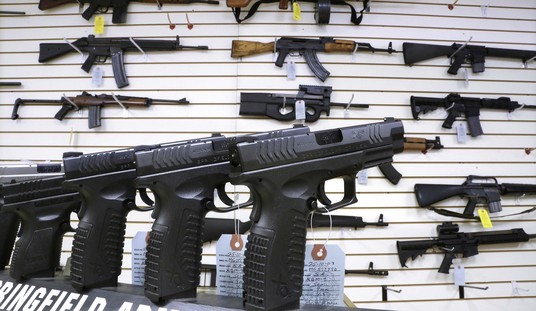
WASHINGTON -- By striking down the District of Columbia's extraordinarily strict gun control law, which essentially bans guns, a federal appeals court may have revived gun control as a political issue. It has been mostly dormant since autumn 2000, when Al Gore decided he was less interested in it than in carrying states such as Michigan and Pennsylvania: "Gore Tables Gun Issue As He Courts Midwest" (The New York Times, Sept. 20, 2000). The appeals court ruling appalls advocates of gun control laws, and should alarm the Democratic Party.

The court ruled 2-1 that D.C.'s law, which allows only current and retired police officers to have handguns in their homes, violates the Constitution's Second Amendment: "A well regulated militia, being necessary to the security of a free state, the right of the people to keep and bear arms, shall not be infringed."

This ruling probably will be reviewed by the Supreme Court, which 68 years ago seemed to hold that the amendment's first 13 words circumscribe the force of the rest. That is, there is a constitutionally protected right to "keep and bear" guns only insofar as the keeping and bearing are pertinent to service in state-run militias.

In 2000, advocates of stringent gun control thought they had won their argument with historical evidence when an Emory University historian, Michael Bellesiles, published ``Arming America: The Origins of a National Gun Culture.'' This book, which was awarded the Bancroft Prize, the most coveted honor for American history scholarship, argued that when the Second Amendment was written, guns were not widely owned or reliable enough to be important. Therefore the amendment was written to protect only the rights of states, not of individuals.

Before long, however, other scholars argued that much of Bellesiles' "research" consisted of meretricious uses of, fabrication of, or disregard of, evidence. And in 1989, Sanford Levinson of the University of Texas Law School had written in a Yale Law Journal article, "The Embarrassing Second Amendment," that the amendment's language, properly read, is an embarrassment to those who favor whittling away the amendment's protection of the individuals' right to own guns.

He noted that if James Madison, the foremost shaper of the Constitution, and his colleagues in the First Congress intended the Second Amendment to protect only the states' rights to maintain militias, the amendment could have simply said: "Congress shall have no power to prohibit state militias." Or as Virginia's George Mason, who opposed ratification of the Constitution because it lacked a Bill of Rights, said, "Who are the militia? They consist now of the whole people."

When Madison and others fashioned the Bill of Rights, they did not merely constitutionalize -- make fundamental -- the right to bear arms. They made the Second Amendment second only to the First, which protects the freedoms of speech, press, assembly and worship. They did that because individual dignity and self-respect, which are essential to self-government, are related to a readiness for self-defense -- the public's involvement in public safety. Indeed, 150 years ago this month, in the Dred Scott decision, Chief Justice Roger Taney said that one proof that blacks could not be citizens was the fact that the Founders did not envision them having the same rights that whites have, including the right to "keep and carry arms."
Increasingly, however, some constitutional scholars and judicial rulings argue that several restraints the Bill of Rights puts on government can be disregarded if the worthiness -- as academics or judges assess that -- of government's purposes justifies ignoring those restraints. Erwin Chemerinsky, professor of law and political science at Duke University, argued in The Washington Post last week that even if the Second Amendment is correctly construed as creating an individual right to gun ownership, the D.C. law should still be constitutional because the city had a defensible intent (reducing violence) when it annihilated that right.
Sound familiar? Defenders of the McCain-Feingold law, which restricts the amount, timing and content of political campaign speech, say: Yes, yes, the First Amendment says there shall be "no law ... abridging the freedom of speech." But that proscription can be disregarded because the legislators' (professed) intent -- to prevent the "appearance" of corruption and to elevate political discourse -- is admirable.

If the Supreme Court reverses the appeals court's ruling and upholds the D.C. gun law, states and localities will be empowered to treat the Second Amendment as the D.C. law does -- as a nullity. This will bring the gun control issue -- and millions of gun owners -- back to a roiling boil. That is not in the interest of the Democratic Party, which is supported by most ardent supporters of gun control.

Share:
Vote on It:
Average Vote:
 
About The Author
George F. Will is a 1976 Pulitzer Prize winner whose columns are syndicated in more than 400 magazines and newspapers worldwide.
 
TOWNHALL DAILY: Be the first to read George Will's column. Sign up today and receive Townhall.com daily lineup delivered each morning to your inbox.
Subject: Well
First of all, if Will's SCOTUS cite refers to Miller, he totally misrepresented the finding in the case. They found against Miller in that case because the weapon at issue, a sawed-off shotgun, wasn't the type of weapon in common use by the military. They certainly did not find that the right in and of itself was only a collective right, nor one restricted to state militias. As a matter of fact, their finding is that had the weapon been one in common with the standard arms issue of the military, the case against Miller would have been thrown out.

He glosses over Bellesiles' academic disgrace as a result of the complete fabrication of the "facts" used to support the premise of his book.

He manages to omit mentioning that Title 18 USC defines the militia as essentially all able bodied and law-abiding citizens between the ages of 18 and 45.

He also manages to forget to tell us his own opinion on the matter. And judging by his positions in a lot of his columns of late, I suspect George wouldn't be shedding any tears in the Appelate Court ruling was reversed by SCOTUS.

And now you have....

the REST of the story.

Dichotomy
The thing that constantly amazes me is that the same ardent defenders of the First Amendment, the ones who constantly point out "the right of the people" phrasing and argue (correctly) that "the people" means everyone, are the same people who oppose the second amendment, because in that case "the people" clearly only means the National Guard or the police or whoever else they fancy that the militia portion of the text refers to.

The founders were well aware that the monarchy in England kept power by disarming the citizens. A well-armed citizenry in the states (a militia, if you will) was intended as a counter to the risk of tyranny at the level of federal government, as well as a hedge against foreign aggression.
Sign Up to Post Your CommentsSign Up to Post Your Comments
If you are already registered, click here to login. Otherwise, please take a few seconds to register with Townhall.com. Once you sign up, you’ll be able to post your comments immediately, use the action center, get podcasts, and more!
Note: Fields marked with a red asterisk (*) are required.
Salutation:
First Name:
*
Last Name:
*
Email:
*
Nickname:
*
Note: Nick name will be shown when you post comments.
Address 1:
*
Address 2:
City:
*
State:
*
Zip:
*
Phone:
      
Your daily dose of conservative columns, editorial cartoons, talk radio, news, and more!
(Bi-Weekly) We highlight the best opportunities from our partners for surveys, action items and more.