| HERZLIYA, Israel -- Riding through sun-splattered Tel Aviv after
an arduous flight from Washington, my vision is directed toward two towering
skyscrapers by my driver. "Azrieli Center," he notes. "Our Twin Towers."
The he adds, "They're two minutes flight from Jordan. That is
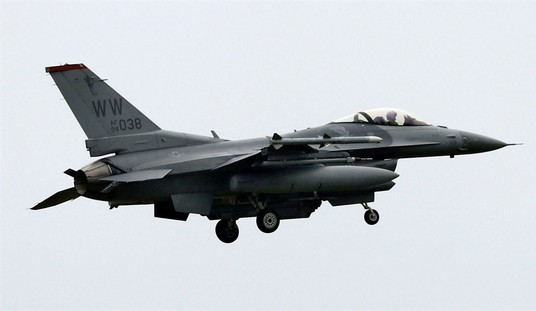
why we keep the planes in the air." By "the planes," I assume he means
Israeli fighters. Much as the Pentagon keeps American fighters in the air
over Washington in time of heightened terrorist alert (we who live there
hear them rumbling overhead), the Israelis keep their fighters in the air
and on the lookout for hostile incoming aircraft that might plow into their
Twin Towers and other vulnerable landmarks. Only for the Israelis the time
of heightened alerts is always, not simply when the
FBI gets jittery.
The warning time here in Israel is two minutes. The planes will
not likely be Jordanian, but rather from states beyond Jordan. On the other
hand, they could be planes hijacked in Jordan. In any event, the Israelis
have no margin for error.
Israel has been on terror alert for much of its history, going
back to 1948. This time around, the alert has lasted two years. At first,
the Israelis were on the alert for Palestinian killers who murdered
civilians from ambush. Now there are the suicide bombers who blow themselves
up in crowded public places. The current casualty list numbers close to 700
Israelis.
Students of world politics might well wonder what would follow
if the Islamofascists fly a helicopter into Tel Aviv's Azrieli Center. The
skies of Tel Aviv are as abundant with helicopters as any other prosperous
modern city. How would the Israelis respond? There are other vulnerable
buildings in Israel. Nearby the resplendent seaside city of Herzlia, where I
am staying, there is an oil facility that if sabotaged could lead to the
deaths of 20,000 local residents. Already one truckload of explosives meant
for the installation failed to reach its target. What would the Israelis'
response be if they suffered that kind of loss in the current struggle?
At the conference I am attending, "The New Strategic Landscape:
Trends, Challenges and Responses," Israeli generals outline the difficulty
they face. They might be at peace with Jordan and Egypt, but that does not
simplify their defense. Maj. Gen. Amos Yadlin, commandant of the Israeli
Defense Forces' Colleges, suggests how difficult peace agreements with
Jordan have made Israeli defense planning. Incoming threats from Iran or
Iraq would now be flying over neutral Jordan. Do Israeli defenders hold
their fire until the hostile aircraft cross into Israeli territory? Israel
is a tiny country. Its population and critical facilities are massed
together in close proximity. Its defenders cannot wait until its borders are
crossed, but what do they do?
The answer the generals suggest is "unconventional warfare."
This is where their lectures lost me. Possibly they want their discussion of
"unconventional warfare" to confuse listeners, which might include enemies.
From all I could tell in this war "without borders," intelligence operatives
are being used and high tech. The idea has got to be to destroy outside
enemies before they leave their own soil. To repeat myself, tiny Israel has
no margin for error.
Interestingly, I am told George W. Bush learned this personally
during a historic helicopter flight with Ariel Sharon in 1998. Sharon was
not yet prime minister; and Bush, of course, was still governor of Texas. He
was traveling with other American governors in Israel when an aide to
Sharon, who was then foreign minister, suggested that Sharon give the
Americans an aerial view of Israel. They climbed into a helicopter and flew
over Samaria. At the end of the flight, the governor of the vast state of
Texas turned to Sharon's aide, Ra'anan Gissen, now the prime minister's
senior advisor, and exclaimed, "I never knew how small Israel was." Israel's
vulnerability was not lost on the former pilot from the Texas National
Guard. He knows Israel's strategic needs.
Israel is in a very difficult bind. Its citizens face the stress
of suicide bombers within its borders and large armies beyond. Yet the
people's spirits are unbowed. Asked recently if he feared Israel that Israel
could be facing another defeat similar to the defeat the ancient Jews
suffered at the hands of the Romans at Masada in A.D. 73, Foreign Minister
Benjamin Netanyahu quipped: "Not this time. Now the Romans are on our side."
Perhaps that explains the familiar tune I heard an Israeli girl whistling
when I checked into my hotel the other night. It was the American national
anthem, which does have an agreeably jaunty tempo.
|