Townhall.com, Where Your Opinion Counts
Talk Radio:   Bill Bennett   Mike Gallagher   Dennis Prager   Michael Medved   Hugh Hewitt   
BREAKING NEWS  LeftArrow - Townhall.com   RightArrow - Townhall.com  
Columns, funnies & more in your inbox!
Monday, August 30, 2004
Michael Barone :: Townhall.com Columnist
No truce in the culture war
by Michael Barone
Vote on It:
Average Vote:
[+] Text [-]
 
 
Poll
Are Barack Obama's friends -- like Bill Ayers -- legitimate political issues?

 Last July at the Democratic convention in Boston, John Kerry said, "Let's build unity in the American family, not angry division." Four years ago at the Republican convention in Philadelphia, George W. Bush said he wanted to be a "uniter, not a divider."

 Yet most of the crowd in Boston seethed with hatred for Bush, and most of the crowd in Philadelphia seethed with hatred for Bill Clinton. The atmosphere of the presidential campaign today is suffused with anger, and Kerry's invocation of his military service and the Swift Boat Veterans for Truth ads criticizing him have reopened the festering wounds of Vietnam. The campaign finance law of 2002, supported mostly by Democrats and signed by President Bush, has led to an unprecedented wave of negative ads financed mostly by rich Democrats, though rich Republicans have now entered the fray as well.

 To be sure, not a happy picture. But one that seems inevitable since American politics has devolved into a grim battle between two approximately equal-size armies in a take-no-prisoners culture war. For years, political scientists called for a realignment along ideological lines. Now we've got it. Be careful what you wish for.

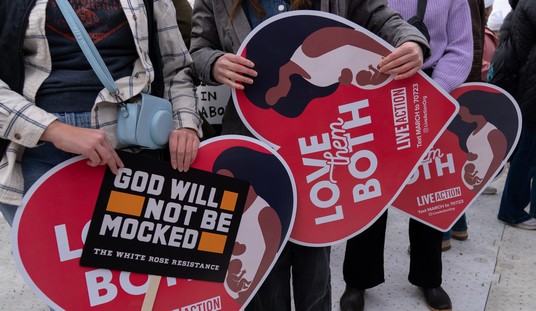
 Yet it's also true that burning issues can disappear. You heard little last month in Boston, and you'll hear little this week in New York, about abortion and gun control, two of the most-talked-about issues of the 1990s. That's partly because Democrats think that gun control cost Al Gore crucial votes in 2000 and because Republicans think that abortion is not a winner for George W. Bush. But it's also because those Americans who have wanted to outlaw abortion and those who have wanted to outlaw guns -- two almost totally nonoverlapping groups -- have figured out that they are not going to get their way. We're going to have lots of abortions and lots of guns for years to come.

 With this interesting difference: There will be fewer abortions and more guns. The number of abortions peaked in 1990 at 1.6 million; in 2000 it was 1.3 million, a decline of 19 percent during a period when pregnancies declined by only 6 percent. There seems to be an increasing stigma on abortion: The National Abortion and Reproductive Rights Action League recently changed its name to naral Pro-Choice America. The number of guns seems clearly to have increased, as the number of states allowing law-abiding citizens to obtain on demand licenses to carry a concealed weapon has risen to 38.

 The consequences of these trends have been benign. We have seen decreases in child poverty and children in one-parent families even as abortion has plunged. And we have seen decreases in crime even as gun ownership has risen. Economist John Lott has shown that violent-crime rates have declined when concealed-carry laws are passed -- evidently criminals are less willing to assault people who may be armed. In contrast, when Great Britain and Australia recently passed laws banning gun ownership, crime sharply increased.

 Neither of these trends is surprising in a country where many people believe they have a right to an abortion (the Supreme Court says so) and a right to bear arms (the Second Amendment says so). What is interesting is that even as these issues disappear, the composition of both parties' coalitions -- the two armies in the culture wars -- has remained very much the same. New cultural issues have appeared. Democrats in Boston talked a lot about Bush's supposed ban on stem-cell research (he actually restricted federal funding of embryonic stem-cell research). Republicans in New York may talk a lot about upholding traditional marriage (Kerry opposes same-sex marriage but backs civil unions). But stem-cell research, much of it privately funded, is likely to increase, and same-sex unions, legally sanctioned or not, will probably become more numerous. As on abortions and guns, Americans are free to live as they want, whatever politicians say.

 The non-economic issues both parties are talking most about are Iraq and foreign policy -- legitimate issues with pretty clear differences between the candidates. But few voters on either side of the culture war seem to have changed sides. We're still divided, and both parties are concentrating on rallying the troops on their side.

Share:
Vote on It:
Average Vote:
 
About The Author
Michael Barone is a senior writer with U.S. News & World Report and the principal co-author of The Almanac of American Politics, published by National Journal every two years. He is also author of Our Country: The Shaping of America from Roosevelt to Reagan, The New Americans: How the Melting Pot Can Work Again, the just-released Hard America, Soft America: Competition vs. Coddling and the Competition for the Nation's Future.
 
TOWNHALL DAILY: Be the first to receive Michael Barone's column. Sign up today and receive Townhall.com daily lineup delivered each morning to your inbox.
 
©Creators Syndicate
Sign Up to Post Your CommentsSign Up to Post Your Comments
If you are already registered, click here to login. Otherwise, please take a few seconds to register with Townhall.com. Once you sign up, you’ll be able to post your comments immediately, use the action center, get podcasts, and more!
Note: Fields marked with a red asterisk (*) are required.
Salutation:
First Name:
*
Last Name:
*
Email:
*
Nickname:
*
Note: Nick name will be shown when you post comments.
Address 1:
*
Address 2:
City:
*
State:
*
Zip:
*
Phone:
      
Your daily dose of conservative columns, editorial cartoons, talk radio, news, and more!
(Bi-Weekly) We highlight the best opportunities from our partners for surveys, action items and more.